
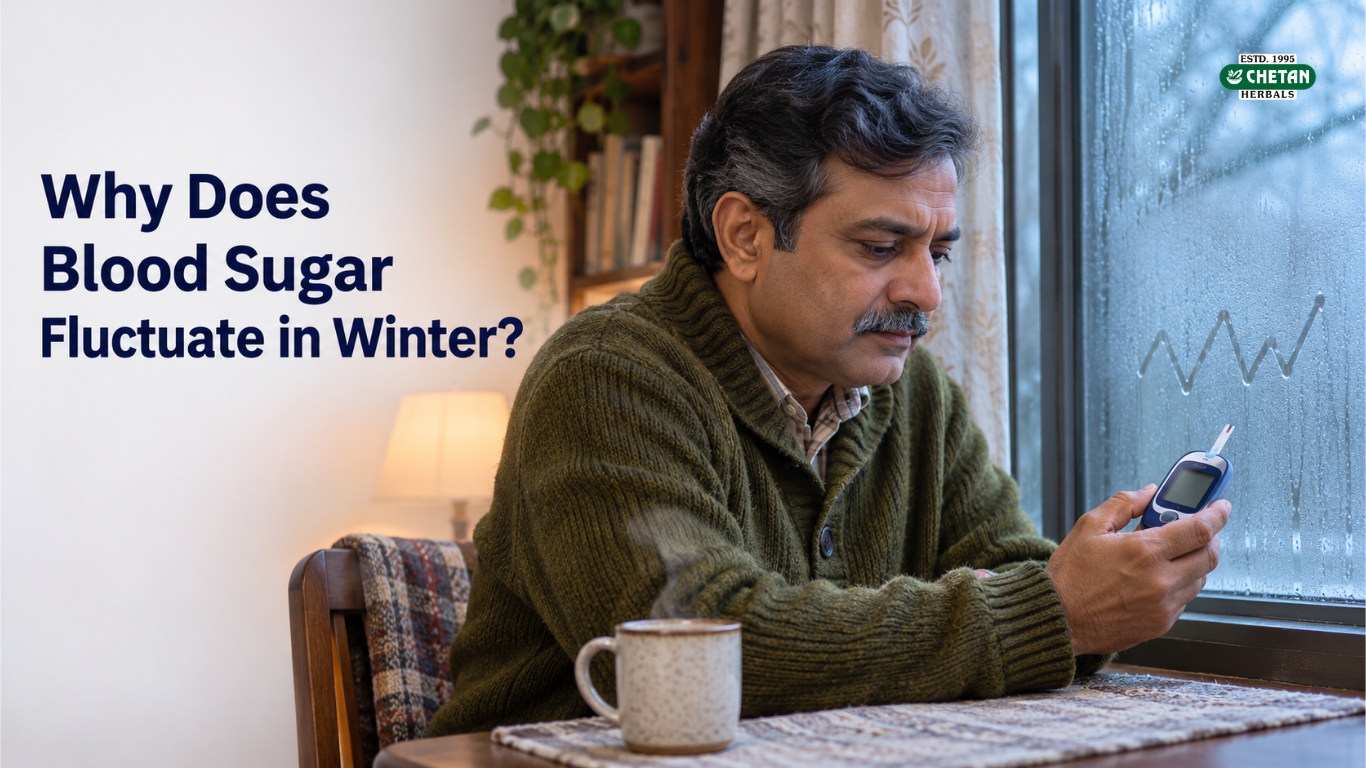
Blood Sugar in Winter may fluctuate due to reduced physical activity, changes in eating habits, cold-related stress responses, seasonal infections and dehydration. These factors can make glucose management more challenging, especially for people living with diabetes. A balanced diet, regular exercise, adequate hydration and routine glucose monitoring can help support better blood sugar management during colder months.
Why Does Blood Sugar Fluctuate in Winter?
Several seasonal and lifestyle-related factors may contribute to Blood Glucose Fluctuations. Understanding these factors can help people take better care of their health.
1. Reduced Physical Activity
During winter, people may avoid morning walks, outdoor exercise and other physical activities because of low temperatures. Spending more time sitting indoors can reduce daily movement.
Physical activity helps muscles use glucose for energy and improves insulin sensitivity. When movement decreases, the body may become less efficient at managing blood glucose.
This is why regular movement is an important part of Winter and Diabetes management. Indoor walking, stretching and gentle yoga can be useful alternatives when outdoor conditions are uncomfortable.
2. Changes in Eating Habits
Winter is associated with seasonal foods, sweets, fried snacks and calorie-rich comfort meals. Frequent consumption of sugary foods and refined carbohydrates may contribute to higher blood glucose levels.
Eating larger portions or changing regular meal timings can also affect glucose management.
A balanced Winter Diet for Diabetics may include seasonal vegetables, pulses, suitable whole grains and protein-rich foods. Portion control and individual nutritional requirements should always be considered.
3. Cold Weather and Stress Hormones
Cold temperatures can create physical stress for the body. In response, the body may release hormones such as cortisol and adrenaline.
These hormones can stimulate the liver to release glucose into the bloodstream and may interfere with insulin sensitivity. Consequently, some people may experience High Blood Sugar in Winter.
However, cold weather does not automatically increase blood glucose in everyone. Individual responses depend on health conditions, activity levels and other factors.
4. Seasonal Illness and Infections
Winter is a common season for respiratory infections, colds and influenza. When the body fights an infection, it releases stress hormones that can increase insulin resistance.
As a result, blood glucose may rise even when a person is eating less than usual. Certain cold and flu medications may also influence glucose readings.
People living with diabetes should follow their healthcare professional’s sick-day instructions and monitor their glucose levels as advised.
5. Dehydration During Winter
People often drink less water during winter because they may not feel as thirsty as they do during summer. However, adequate hydration remains important throughout the year.
Dehydration can contribute to higher blood glucose concentrations and make diabetes management more difficult.
Drinking sufficient water and including suitable sugar-free fluids in the daily routine can support hydration.
6. Changes in Sleep and Daily Routine
Shorter daylight hours, irregular sleeping schedules and reduced outdoor activities may influence everyday habits.
Poor sleep and ongoing stress can affect hormones involved in glucose regulation. Skipping meals or changing medication timings without medical advice may further complicate Diabetes Management in Winter.
How to Maintain Blood Sugar in Winter?
Following simple and consistent habits can support Winter Blood Sugar Control.
- Stay Physically Active: Include indoor walking, stretching, yoga or other suitable exercises in your daily routine.
- Follow a Balanced Diet: Choose seasonal vegetables, pulses, whole grains and appropriate protein sources. Limit frequent consumption of sweets and sugary beverages.
- Monitor Blood Glucose: Follow your healthcare professional’s recommended testing schedule and keep a record of readings.
- Maintain Proper Hydration: Drink adequate water throughout the day, even when you do not feel very thirsty.
- Get Sufficient Sleep: Maintain regular sleeping and waking times to support overall metabolic health.
- Take Care During Illness: Monitor glucose according to your sick-day plan. Never change or stop diabetes medication without professional guidance.
Ayurvedic Lifestyle Tips for Winter Wellness
In Ayurveda, seasonal lifestyle practices are known as Ritucharya. They encourage individuals to adapt their food habits and daily routines according to seasonal changes.
During winter, a balanced routine may include freshly prepared meals, suitable seasonal vegetables, regular physical activity and adequate rest.
Traditional ingredients such as ginger and cinnamon are commonly used in winter diets. However, they should not be considered substitutes for prescribed diabetes medication or proven treatments for high blood glucose.
Ayurvedic dietary practices should be selected according to individual health needs and should complement appropriate medical care.

Blood Sugar in Winter
Chetan Herbals Mha Mochak Powder – Ayurvedic Wellness Support
Along with a balanced diet, regular physical activity and appropriate medical care, some individuals also explore traditional Ayurvedic formulations as part of their overall wellness routine.
Chetan Herbals Mha Mochak Powder is an Ayurvedic herbal formulation positioned for diabetes-related wellness support. It contains a blend of 8 herbs and is available in a 120 g pack.
The formulation is presented as an option for people interested in incorporating Ayurvedic products into their wellness routine. However, its effectiveness in managing blood glucose or improving insulin function should not be assumed without appropriate clinical evidence.
Expert Advice by Vaidya Dr. Chetan Gupta
Vaidya Dr. Chetan Gupta emphasises the importance of maintaining a disciplined lifestyle throughout seasonal changes. During winter, individuals should pay attention to their food habits, physical activity, hydration and sleeping patterns.
People living with diabetes should monitor their individual glucose readings instead of assuming that cold weather affects everyone in the same way. A balanced diet, regular movement and timely medical guidance are important parts of responsible diabetes management.
When Should You Consult a Doctor?
Occasional glucose variations can happen, but repeated or unexplained fluctuations should not be ignored.
Consult a healthcare professional if you experience:
- Repeatedly high or low blood glucose readings.
- Excessive thirst or frequent urination.
- Unusual weakness, dizziness or sweating.
- Fever, vomiting or difficulty maintaining hydration.
- Unexpected glucose changes despite following your treatment plan.
Severe hypoglycaemia, confusion, unconsciousness, breathing difficulty or suspected diabetic ketoacidosis requires urgent medical attention.
Frequently Asked Questions (FAQs)
- Why does blood sugar increase in winter?
Blood sugar may increase due to reduced physical activity, dietary changes, cold-related stress responses and seasonal infections. Individual responses vary.
- Can cold weather affect blood sugar levels?
Yes. Cold temperatures may trigger stress responses that influence insulin sensitivity and glucose levels in some individuals.
- Does winter increase the risk of diabetes?
Winter does not directly cause diabetes. However, seasonal changes in physical activity, food habits and weight management may affect glucose control.
- What foods are suitable for diabetics during winter?
Non-starchy vegetables, pulses, suitable whole grains, nuts in controlled portions and protein-rich foods can be part of a balanced winter diet.
- Does walking in winter help control blood sugar?
Yes. Regular walking helps muscles use glucose and can improve insulin sensitivity. Indoor walking is a useful alternative during very cold weather.
- Can Ayurvedic products replace diabetes medicines?
No. Ayurvedic products should not replace prescribed diabetes medication. Consult a qualified healthcare professional before using herbal formulations alongside diabetes treatment.
- How often should diabetics check blood sugar in winter?
Testing frequency depends on diabetes type, medication and individual health needs. Follow the schedule recommended by your healthcare professional.
Conclusion
Understanding the reasons behind Blood Sugar in Winter can help individuals make better lifestyle decisions during colder months. Reduced physical activity, dietary changes, stress hormones, seasonal infections and dehydration may all contribute to glucose fluctuations.
Winter wellness is not about following restrictive diets or relying only on home remedies. It is about maintaining a balanced routine, monitoring blood glucose regularly and following an appropriate medical care plan.
With consistent healthy habits and professional guidance, people living with diabetes can take better care of their health throughout the winter season.




Write a comment
Your email address will not be published. All fields are required