
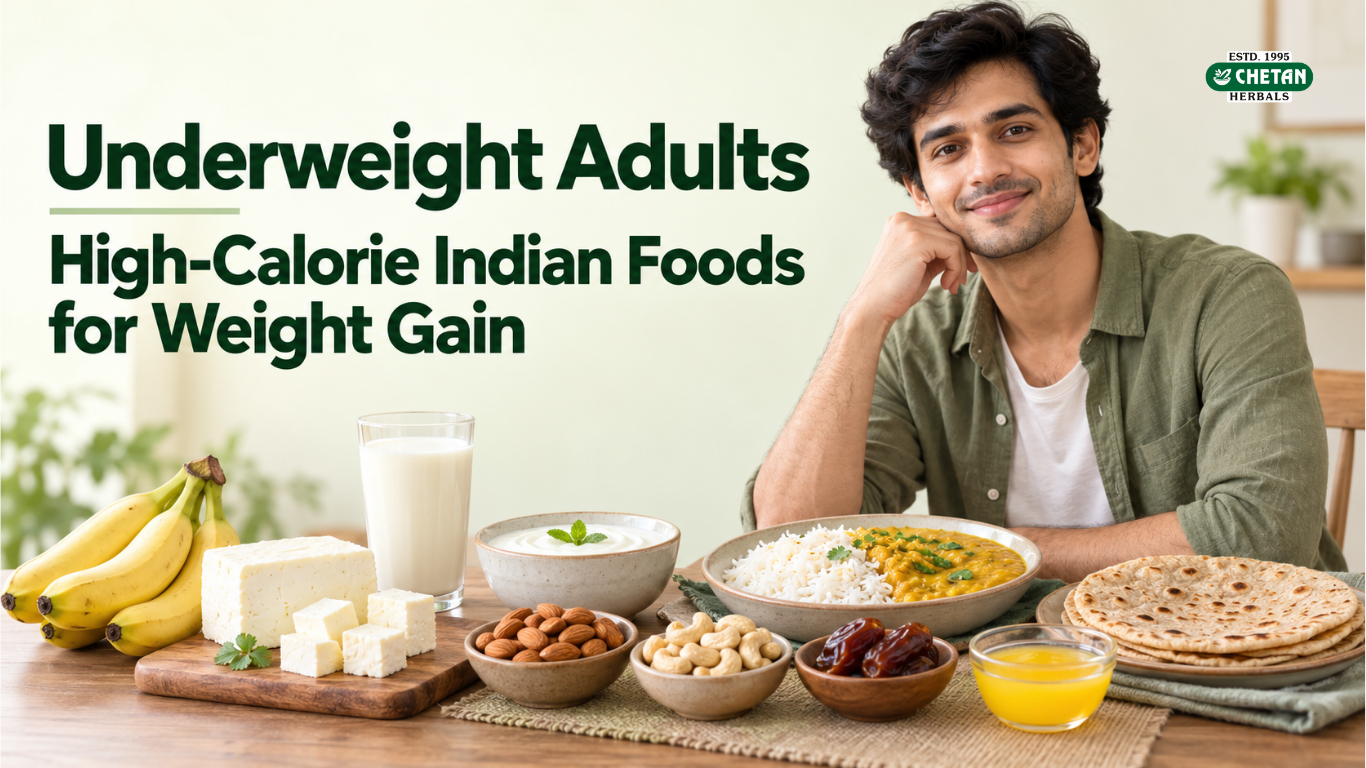
Being Underweight can be challenging, especially when you eat regularly but still struggle to gain weight. Healthy weight gain is not simply about eating more calories or relying on fried and sugary foods. Your body needs a balanced combination of calories, protein, carbohydrates, healthy fats, vitamins and minerals.
For Indian adults, traditional foods can make it easier to increase calorie intake naturally. Foods such as paneer, milk, curd, dal, rice, bananas, nuts, dates, ghee and sattu can be included in a balanced weight gain diet. Along with food, regular meals, adequate sleep and appropriate physical activity can support gradual and sustainable weight gain.
What Does Underweight Mean?
In adults, an Underweight BMI is generally considered to be below 18.5. However, BMI is only a screening measure and does not provide a complete picture of an individual’s health or body composition.
Some people naturally have a smaller body frame. However, if your weight is unexpectedly decreasing, your appetite is consistently poor, or you are experiencing weakness or digestive problems, it is important to look beyond diet alone.
A person who is struggling to gain weight should consider the possible reason for their low weight instead of simply consuming large amounts of food.
Common Reasons for Being Underweight
Several factors can contribute to being Underweight, including:
- Not eating enough calories
- Skipping meals frequently
- Poor appetite
- High levels of physical activity
- Stress and an irregular lifestyle
- Digestive discomfort
- Difficulty following a balanced diet
- Certain underlying health conditions
Therefore, a good healthy weight gain plan should focus on both adequate nutrition and the individual’s overall health.
foods-for-healthy-weight-gain
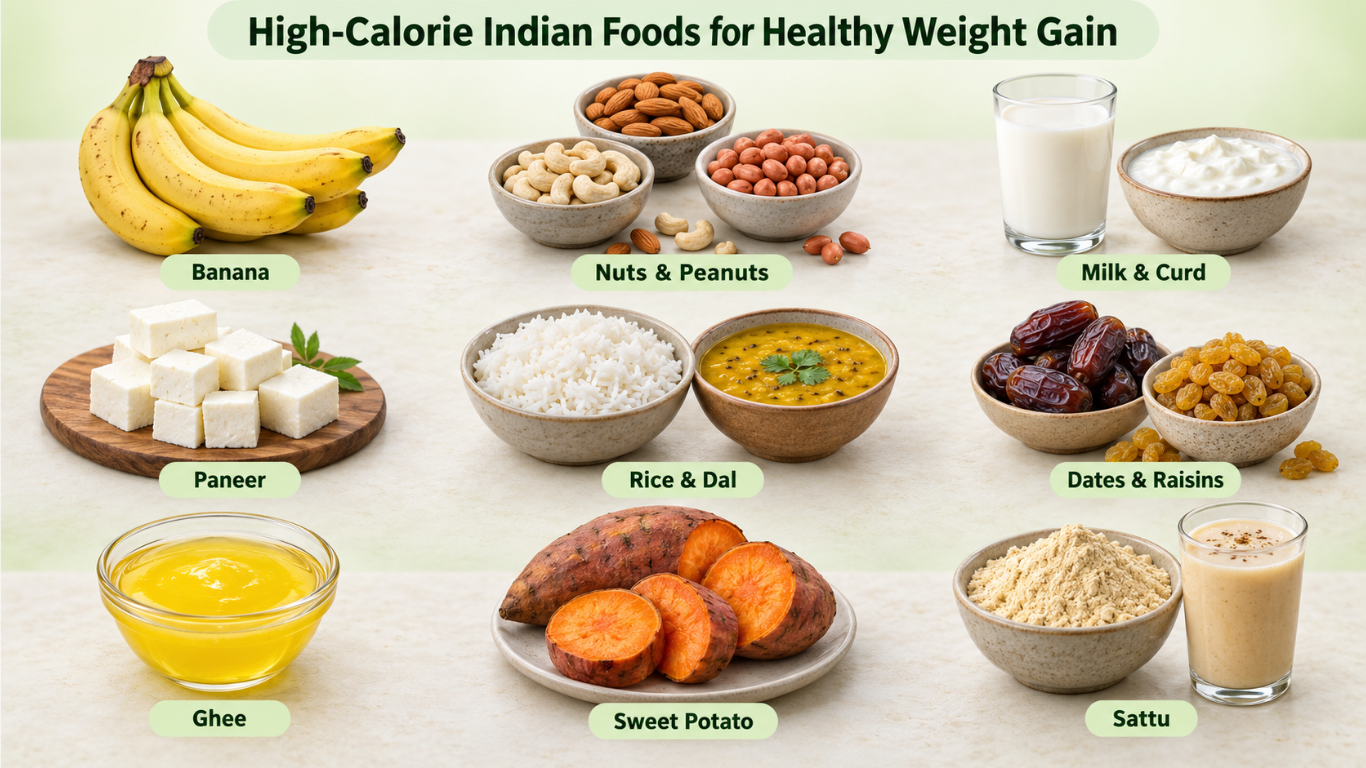
High-Calorie Indian Foods for Healthy Weight Gain
Choosing nutrient-dense foods can help an Underweight adult increase calorie intake without depending heavily on processed foods.
1. Bananas
Bananas are an easy and affordable addition to a weight gain diet. They provide carbohydrates and can be combined with milk, oats, nuts or peanut butter.
A homemade banana shake can be a convenient snack between meals.
2. Nuts and Peanuts
Almonds, cashews, walnuts and peanuts contain calories, healthy fats and some protein. Because nuts are energy-dense, a relatively small serving can add extra calories to your daily diet.
You can add nuts to breakfast, snacks, smoothies or homemade desserts.
3. Milk and Curd
Milk and curd can provide protein, calories and important nutrients. People who tolerate dairy well may include them as part of their daily diet.
Homemade lassi or a milk-based smoothie can also be used as a nutritious snack.
4. Paneer
Paneer is a popular Indian food that provides protein and energy. It can be included in paneer bhurji, curry, sandwiches or stuffed parathas.
Combining paneer with roti, rice or other carbohydrate sources can create a more complete meal.
5. Rice and Dal
Rice and dal are a traditional Indian combination that provides carbohydrates and plant-based protein.
You can make the meal more energy-dense by adding vegetables, curd and a moderate amount of ghee according to your dietary needs.
6. Dates and Raisins
Dates and raisins are convenient, naturally sweet foods that can add calories to your diet. They can be eaten as snacks or added to homemade milkshakes.
Since dried fruits are concentrated, moderate portions are generally more practical than consuming large amounts at once.
7. Ghee
Ghee is calorie-dense and can increase the energy content of meals when used in moderation.
A small amount can be added to dal, rice, khichdi or roti. However, healthy weight gain should include a variety of nutrient-rich foods rather than relying on ghee alone.
8. Sweet Potato
Sweet potato provides carbohydrates and can be used as a filling snack or meal component.
Roasted or boiled sweet potato can be combined with curd, paneer or another protein source to make a more balanced meal.
9. Sattu
Sattu, traditionally made from roasted gram, can be included in an Indian weight gain diet. It can be prepared as a drink or used in different meals.
Depending on individual dietary requirements, sattu can be combined with milk or curd to create a nutritious snack.
Simple Indian Weight Gain Meal Plan
A simple weight gain meal plan for Underweight adults could include:
Breakfast: Paneer paratha + curd + banana
Mid-Morning: Seasonal fruit + handful of almonds or peanuts
Lunch: Rice/roti + dal + vegetables + paneer + curd
Evening: Homemade banana, milk and peanut butter shake
Dinner: Roti/rice + dal + vegetables + paneer or another protein source
Bedtime: Milk, if tolerated
This is a general example rather than a personalized diet plan. Calorie and protein requirements differ according to age, body size, activity level, dietary preferences and health status.
Ayurvedic Perspective on Healthy Weight Gain
Ayurveda places importance on digestion and Agni when discussing nourishment. Simply increasing food quantity may not be comfortable for someone who has poor appetite or digestive difficulties.
A regular eating schedule, adequate rest, proper sleep and foods that suit an individual’s digestion can be useful components of a healthy lifestyle.
From an Ayurvedic perspective, dietary recommendations are ideally individualized according to factors such as constitution, digestion, lifestyle and overall health. Ayurvedic medicines or supplements should not be considered a replacement for a balanced diet or professional medical evaluation.
Ayurvedic-support
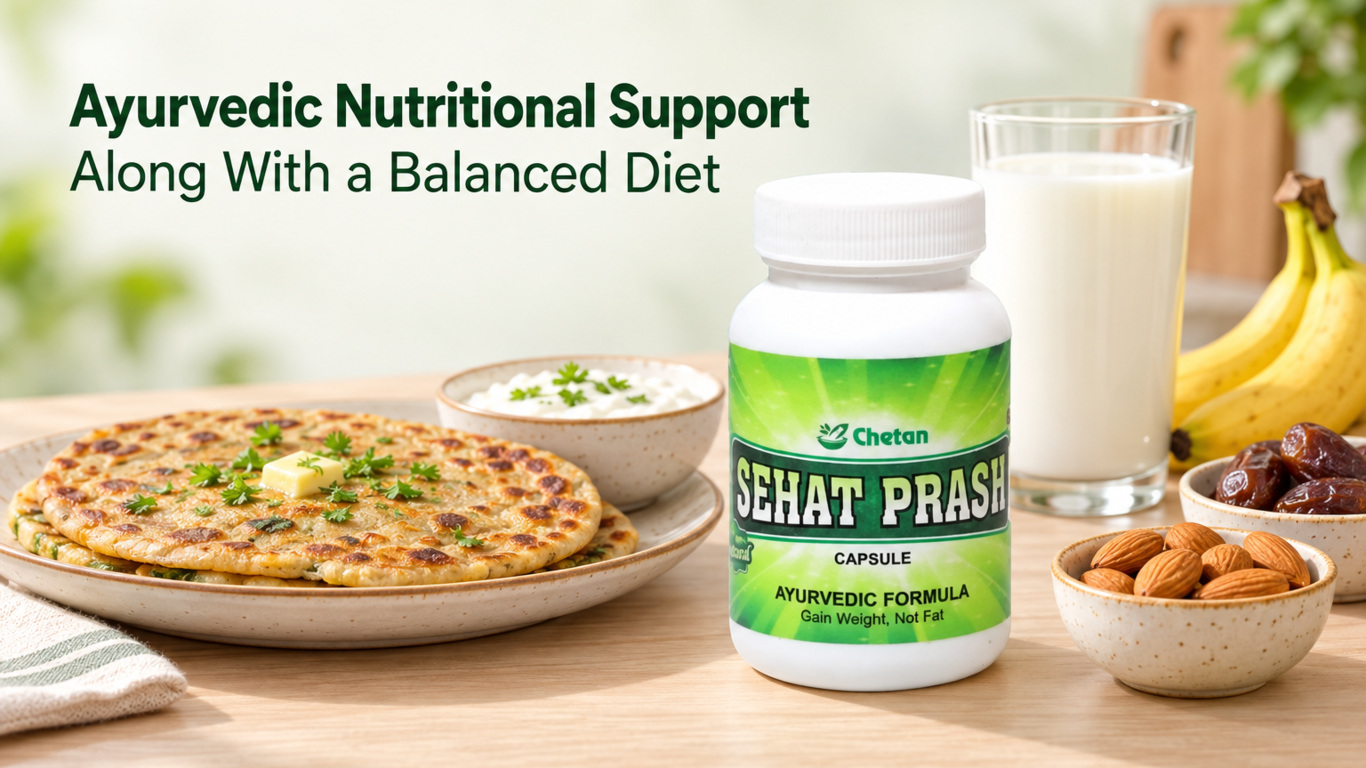
Sehat Prash for Ayurvedic Nutritional Support
For people who are looking for additional Ayurvedic nutritional support as part of their healthy weight gain routine, Sehat Prash can be considered alongside a nutritious daily diet.
Rather than replacing meals, it can be incorporated as a supplementary option within an overall nutrition plan. It can be paired with calorie-dense foods such as milk, bananas, nuts, dates, paneer, dal and rice.
The key point is that a weight-gain supplement should complement a balanced diet—not become the primary source of nutrition.
If you are Underweight, choosing any nutritional supplement should take into account your dietary needs, appetite, digestion, lifestyle and existing health conditions. If you have unexplained weight loss or persistent symptoms, professional evaluation should come first.
Dr. Chetan Gupta’s Expert Advice
Dr. Chetan Gupta,Founder of chetanherbals and Ayurvedacharya & Men’s Health Practitioner, emphasizes that healthy weight gain should focus on nourishment rather than simply increasing the number on the weighing scale.
“Healthy weight gain is not about eating anything and everything. Underweight adults should focus on nutrient-rich, calorie-dense foods along with adequate protein, regular meals and a healthy lifestyle. If weight remains low despite adequate food intake, or there is unexplained weight loss or persistent digestive difficulty, the underlying cause should be evaluated.”
This approach focuses on gradual nutrition and sustainable lifestyle habits instead of quick fixes.
Tips to Gain Weight Naturally
If you are Underweight and want to increase your weight naturally, keep these practical points in mind:
- Do not regularly skip breakfast or other major meals.
- Add calorie-dense nutritious foods to your existing meals.
- Include a protein source in your major meals.
- Use nuts, seeds, dairy and homemade shakes as convenient snacks.
- Prefer homemade, nutrient-rich foods over highly processed calorie sources.
- Maintain a regular sleep schedule.
- Stay physically active according to your fitness level.
- Increase food intake gradually if large meals are difficult to tolerate.
- Monitor your weight and overall wellbeing over time.
When Should You Consult a Doctor?
Being Underweight is not necessarily a medical condition, but unexplained or persistent low weight should not be ignored.
Consider speaking with a healthcare professional if you have:
- Unintentional weight loss
- Persistent loss of appetite
- Ongoing digestive problems
- Significant weakness or fatigue
- Difficulty gaining weight despite eating adequately
- Other unexplained symptoms
Identifying the underlying reason can be more important than simply increasing calorie intake.
Frequently Asked Questions
What are the best Indian foods for an Underweight adult?
Paneer, milk, curd, dal, rice, nuts, peanuts, bananas, dates, sweet potatoes and sattu can be included in a balanced diet for healthy weight gain.
How can I gain weight naturally?
Gradually increase your calorie intake using nutritious foods while maintaining adequate protein, carbohydrates and healthy fats. Regular meals and a consistent lifestyle are also important.
Is banana good for weight gain?
Bananas provide carbohydrates and can be combined with milk, oats, nuts or peanut butter to make a more calorie-dense snack.
Can ghee help with weight gain?
Ghee is calorie-dense and may increase the energy content of meals when used in moderation. It should be combined with a varied and nutritious diet.
Can Sehat Prash be included in a weight gain routine?
Sehat Prash can be considered as an Ayurvedic nutritional support option alongside a balanced diet. It should complement regular nutritious meals rather than replace them.
Conclusion
Being Underweight does not mean that you need to depend on junk food or excessively large meals. A better approach is to gradually increase calorie intake through nutritious Indian foods such as paneer, milk, curd, nuts, bananas, dal, rice, dates, sweet potatoes and sattu.
An effective healthy weight gain diet should also consider protein intake, digestion, physical activity, sleep and the possible reason behind low body weight. Ayurvedic nutritional support such as Sehat Prash may be considered as part of this overall routine.
If your weight is decreasing unexpectedly or you are unable to gain weight despite adequate food intake, consult a qualified healthcare professional to understand the underlying cause.
Healthy weight gain is a gradual process. The goal should be better nourishment, strength and overall wellbeing—not simply a higher number on the weighing scale.





Write a comment
Your email address will not be published. All fields are required