
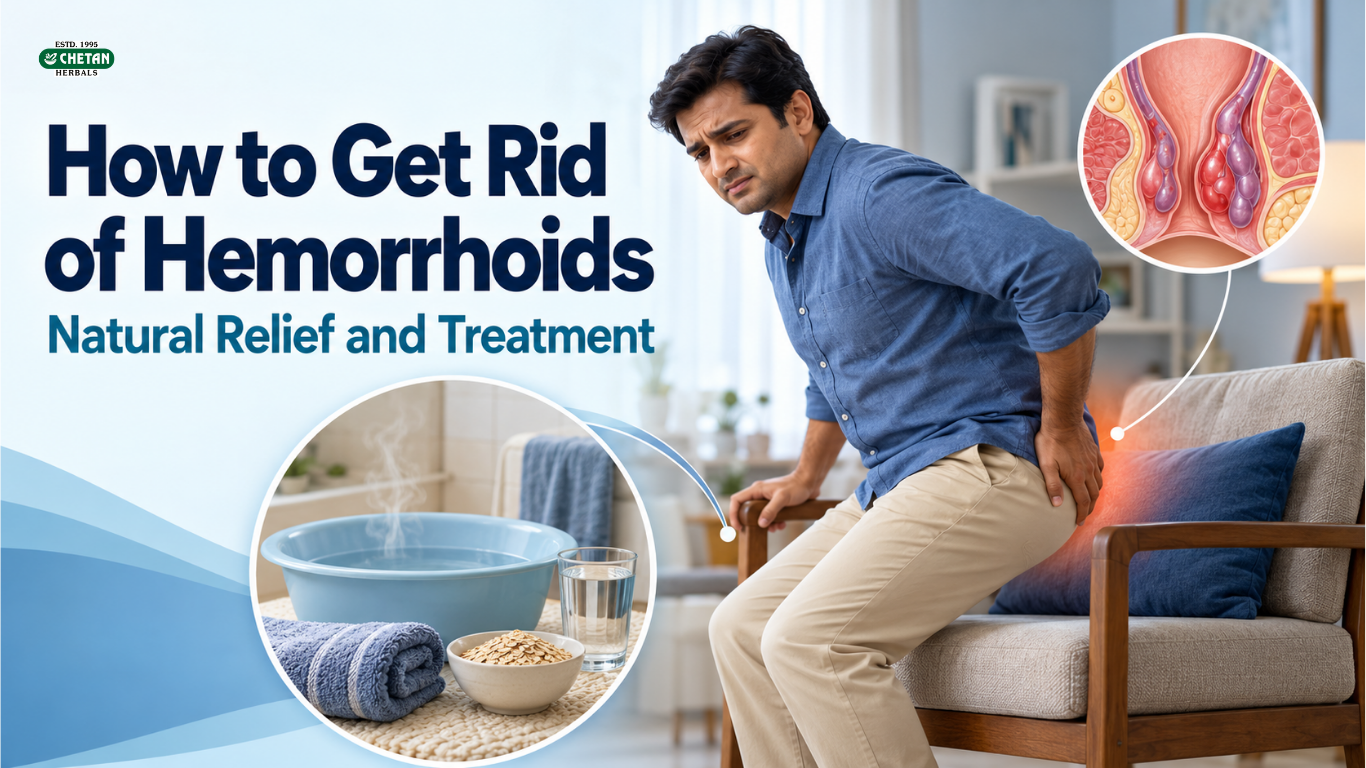
If you want to know how to get rid of hemorrhoids, start with a fiber-rich diet, adequate water intake, regular physical activity and healthy bowel habits. Avoid straining during bowel movements and try warm sitz baths to help relieve discomfort. Mild hemorrhoid symptoms may improve with home care, but persistent bleeding, severe pain or advanced piles may require medical treatment. Ayurvedic products such as Arsh Saffa by Chetan Herbals can also be explored after checking their ingredients, precautions and suitability with a qualified healthcare professional.
What Are Hemorrhoids?
Hemorrhoids, commonly called piles or bawaseer, are swollen blood vessels and supporting tissues around the anus and lower rectum. They may cause itching, discomfort, swelling, pain or bleeding during bowel movements.
Internal hemorrhoids develop inside the rectum and may cause painless bleeding. External hemorrhoids develop beneath the skin around the anus and can cause swelling, tenderness and itching.
Common contributing factors include constipation, repeated straining, prolonged sitting on the toilet and insufficient dietary fiber. Understanding these factors is an important first step when considering how to get rid of piles naturally.
How to Get Rid of Hemorrhoids Naturally
1. Eat Fiber-Rich Foods
One of the most useful natural remedies for hemorrhoids is increasing dietary fiber. Fiber helps soften stools and supports regular bowel movements, reducing the need to strain.
Include fruits, vegetables, oats, whole grains, beans and lentils in your daily diet. Indian food options such as dal, whole-wheat roti, green vegetables, apples and papaya can contribute to a balanced, fiber-rich eating pattern.
Increase fiber gradually to minimize gas and bloating. If constipation continues despite dietary changes, consult a healthcare professional about suitable options.
2. Drink Enough Water
Adequate fluid intake helps fiber work effectively and supports softer stools. Dehydration can contribute to constipation, which may worsen piles symptoms.
Drink water regularly throughout the day, adjusting your intake according to your activity level and climate. People who have been advised to restrict fluids because of a medical condition should follow their clinician’s recommendations.
3. Avoid Straining During Bowel Movements
Straining increases pressure around the anal region and may aggravate hemorrhoids. Do not ignore the urge to pass stool, force bowel movements or spend excessive time sitting on the toilet.
These simple habits can support hemorrhoids treatment at home and help reduce constipation-related discomfort.
4. Try a Warm Sitz Bath
A warm sitz bath involves sitting in comfortably warm, plain water for approximately 10–15 minutes. It may help relieve irritation and discomfort associated with hemorrhoids.
Avoid water that is too hot, perfumed products and harsh substances that could irritate sensitive skin. A sitz bath can ease symptoms but does not guarantee that hemorrhoids will disappear.
5. Stay Physically Active
Regular walking and other suitable physical activities can support bowel regularity and overall health. If you sit for long periods at work, take regular movement breaks.
These lifestyle changes may help relieve hemorrhoid pain and reduce factors that contribute to constipation. However, persistent or worsening symptoms should not be managed through lifestyle changes alone.
how to get rid of hemorrhoids
Foods to Eat and Avoid With Hemorrhoids
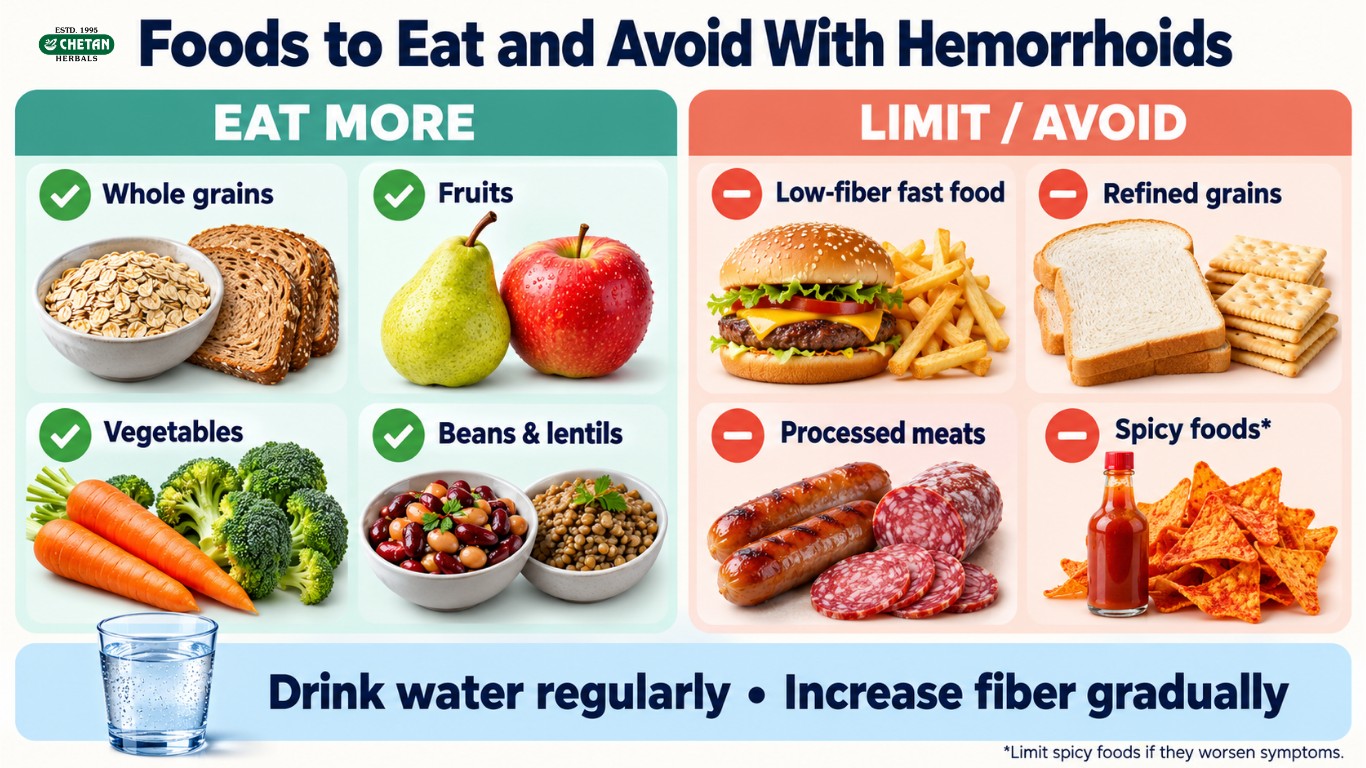
A balanced diet can help prevent hard stools and reduce straining.
Foods to include:
- Fresh fruits and vegetables
- Whole grains and oats
- Beans, lentils and other legumes
- Adequate fluids alongside fiber-rich meals
Foods to limit: Highly processed foods and meals that are low in fiber, particularly when they replace fruits, vegetables and whole grains in your diet.
No single food cures piles. Consistent dietary habits are more useful than relying on one special ingredient or home remedy.
Can Piles Be Treated Without Surgery?
Many people with mild hemorrhoids can manage their symptoms without surgery. Dietary changes, improved bowel habits and appropriate short-term treatments may provide relief.
However, persistent bleeding, significant prolapse or symptoms that do not improve may require medical procedures. Depending on the diagnosis, a clinician may recommend options such as rubber band ligation or surgery.
Therefore, piles treatment without surgery may be possible in some cases, but the appropriate approach depends on the type and severity of hemorrhoids.
how to get rid of hemorrhoids
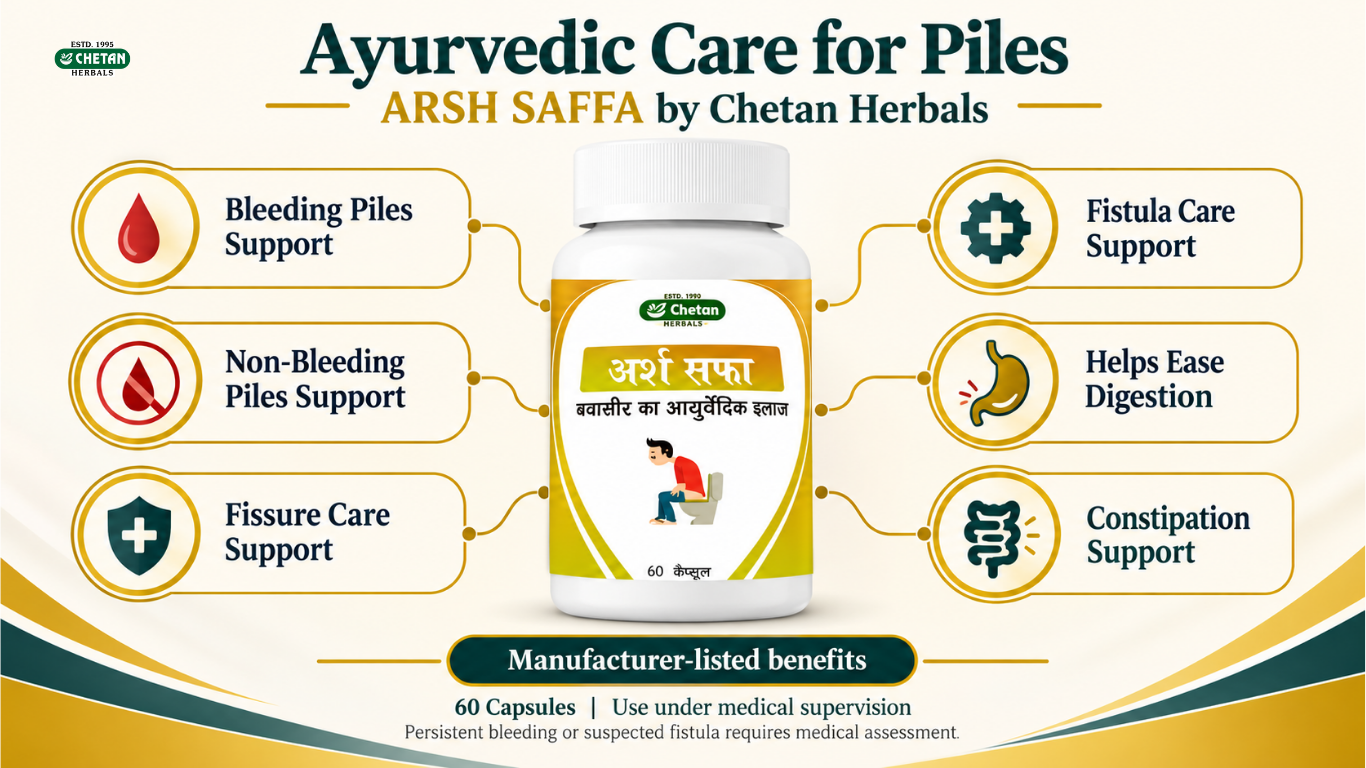
Ayurvedic Treatment for Piles: Arsh Saffa by Chetan Herbals
In Ayurveda, piles are traditionally discussed under the term Arsha. Ayurvedic approaches may consider digestion, bowel regularity, dietary habits and individual health.
Arsh Saffa is an Ayurvedic product from Chetan Herbals marketed for piles-related concerns. People interested in Ayurvedic treatment for piles can review the product’s current label, ingredients, directions and precautions before considering its use.
Consult a qualified healthcare professional before use, especially if you take other medicines, have an existing medical condition or experience rectal bleeding.
Expert Perspective: Vaidya Dr. Chetan Gupta
A responsible approach to piles care begins with understanding symptoms, bowel habits, dietary patterns and overall health. Improving fiber intake, maintaining adequate hydration and avoiding straining are practical starting points for many people. Ayurvedic options should be considered carefully, with attention to product ingredients, individual suitability and the need for medical assessment when warning signs occur.
When Should You See a Doctor?
Consult a healthcare professional if you notice rectal bleeding, persistent symptoms, a painful lump or symptoms that do not improve after about a week of home care.
Seek urgent medical attention for heavy bleeding, severe anal pain, dizziness or faintness. Rectal bleeding should not automatically be attributed to hemorrhoids because other conditions can cause similar symptoms.
Frequently Asked Questions
1. How long does it take for hemorrhoids to go away?
Mild hemorrhoid symptoms may improve within a few days with appropriate home care and better bowel habits. Larger or persistent hemorrhoids may take longer and require medical treatment.
2. Can constipation make hemorrhoids worse?
Yes, constipation and straining during bowel movements can increase pressure around the anal area and aggravate hemorrhoid symptoms. Eating fiber-rich foods and drinking adequate fluids can help support regular bowel movements.
3. Is walking good for people with hemorrhoids?
Walking and other moderate physical activities can support bowel regularity and overall health. Avoid activities that worsen your pain, and consult a healthcare professional if symptoms persist.
4. What should I avoid if I have hemorrhoids?
Avoid straining, sitting on the toilet for long periods and ignoring the urge to pass stool. Limit low-fiber meals if they contribute to constipation, and avoid applying irritating substances to the affected area.
5. Can external hemorrhoids be treated at home?
Mild external hemorrhoid symptoms may improve with warm sitz baths, adequate hydration and softer stools. Severe pain, significant swelling or persistent symptoms should be assessed by a healthcare professional.
Conclusion
Learning how to get rid of hemorrhoids starts with identifying the cause of your symptoms and improving everyday bowel habits. Fiber-rich foods, adequate hydration, warm sitz baths and avoiding straining may help manage mild symptoms. Persistent bleeding, severe pain and recurring problems need proper medical assessment.
Arsh Saffa by Chetan Herbals is an Ayurvedic option that readers can explore after reviewing its product information and consulting a qualified professional. Choose an approach that prioritizes safety, accurate diagnosis and appropriate treatment.



Write a comment
Your email address will not be published. All fields are required