

If you have recently started taking creatine, you may notice the number on the weighing scale going up. This often leads to one common question: does creatine make you gain weight?
The short answer is yes, creatine can increase your body weight, especially during the first few weeks of supplementation. However, this does not necessarily mean that you are gaining body fat. The initial increase is often related to greater water storage inside your muscle cells, while consistent resistance training may contribute to muscle gain over time.
Understanding the difference between water weight, muscle gain and fat gain can help you interpret changes on the weighing scale more accurately.
What Is Creatine and How Does It Work?
Creatine is a naturally occurring compound stored primarily in skeletal muscles. Your body produces creatine naturally, and you can also obtain it from foods such as meat and fish.
Creatine helps replenish phosphocreatine, which supports the rapid production of ATP, the body’s main energy currency during short, high-intensity activities. This is one reason creatine is widely studied for activities such as resistance training, sprinting and repeated high-intensity exercise.
When muscle creatine stores increase, some people experience an increase in body weight.
Does Creatine Make You Gain Weight?
Yes, creatine can cause weight gain, but the type of weight gained matters.
The most common early change is an increase in water stored within muscle cells. This is sometimes called creatine water weight. It is different from the water retention that may occur under the skin and does not automatically mean that you have gained fat.
With regular strength training, creatine may also support improvements in training performance and help contribute to greater muscle mass over time.
Therefore, when asking “does creatine cause weight gain?”, it is important to consider both the short-term increase in water weight and the potential longer-term increase in lean muscle mass.
Why Does Creatine Increase Body Weight?
There are two major reasons your weight may increase while using creatine.
1. Increased Water Stored in Muscles
Creatine draws water into muscle cells as muscle creatine stores increase. This can cause a noticeable increase in body weight, particularly during the early stages of supplementation.
This is not the same as gaining body fat.
2. Potential Muscle Gain
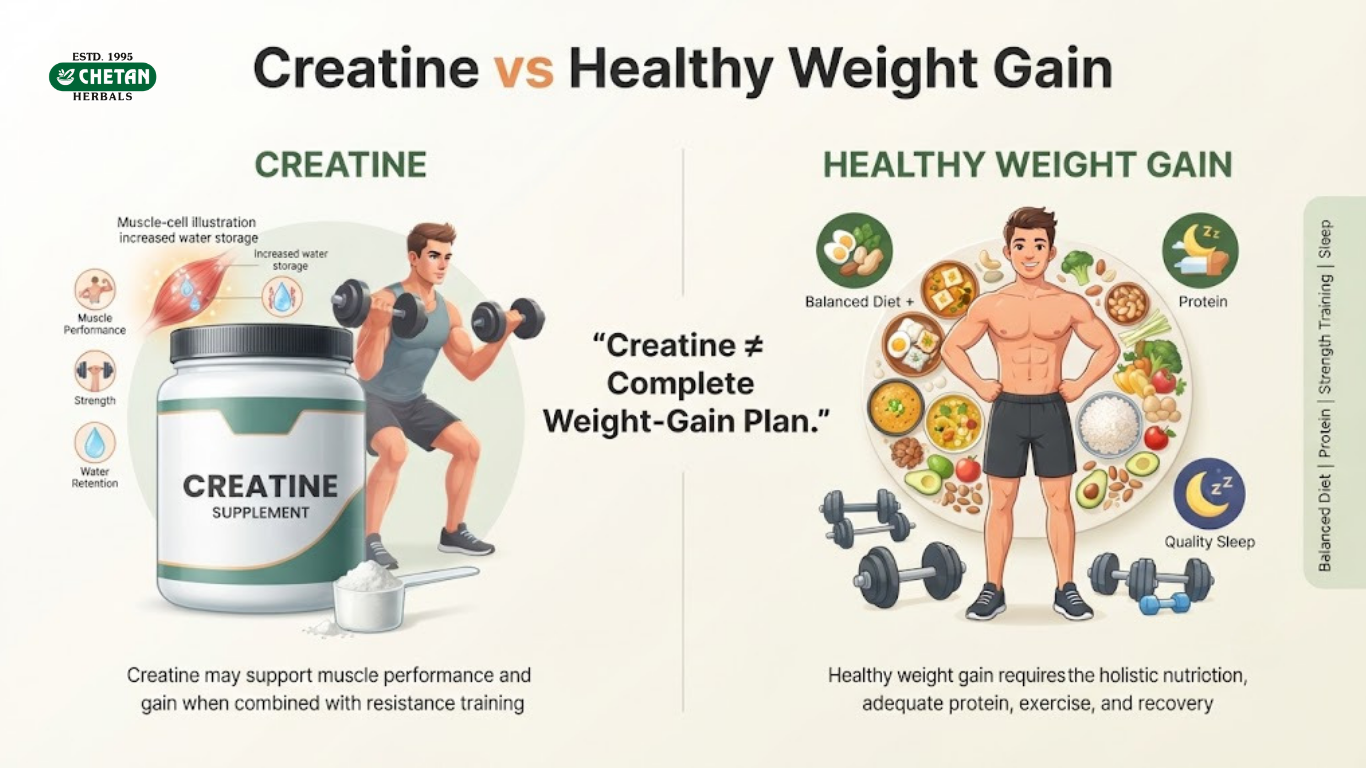
Creatine is not a muscle-building substitute for exercise, adequate nutrition or recovery. However, when combined with resistance training, it can help support training capacity and performance.
Over time, improvements in training can contribute to increased muscle mass.
This is why creatine and weight gain should not automatically be associated with fat gain.
Does Creatine Make You Fat?
One of the biggest misconceptions is that creatine directly makes you fat.
Creatine itself does not directly cause body-fat gain. Body-fat increases primarily when you consistently consume more calories than your body uses.
If someone takes creatine while also following a calorie-surplus diet, their total body weight may increase because of a combination of water, muscle and potentially fat. In that situation, it would be inaccurate to blame all weight gain on creatine.
If your goal is to build muscle while controlling body fat, focus on your overall calorie intake, protein intake, training routine, sleep and consistency.
How Much Weight Does Creatine Add?
The amount varies from person to person.
Some people notice very little change, while others experience a more noticeable increase during the initial weeks. Factors such as starting muscle creatine levels, diet, training status and whether a loading phase is used can influence the change.
A temporary increase on the weighing scale should therefore be interpreted alongside other measurements such as:
- Waist circumference
- Strength and training performance
- Muscle measurements
- Progress photographs
- Overall body composition
The weighing scale is only one measure of progress.
does creatine make you gain weight
Creatine Loading vs. Daily Use
Some people use a creatine loading phase, which involves taking a higher amount for a short period to increase muscle creatine stores more quickly. Others prefer taking a smaller daily amount without a loading phase.
A loading phase may make early changes in body weight more noticeable because muscle creatine stores increase more rapidly.
You do not necessarily need a loading phase to benefit from creatine. A consistent daily approach can also gradually increase muscle creatine stores.
If you have kidney disease, are pregnant or breastfeeding, take regular medications, or have another medical concern, discuss supplementation with a qualified healthcare professional before starting.
Is Creatine Good for Weight Gain?
This depends on what you mean by “weight gain.”
If your goal is muscle gain, creatine can be a useful evidence-based supplement when combined with appropriate resistance training and nutrition.
However, if you are underweight and your goal is overall healthy weight gain, creatine alone is not enough.
Healthy weight gain requires an appropriate calorie intake along with nutrient-dense foods, adequate protein, carbohydrates, healthy fats and regular physical activity.
A weight-gain plan should focus on improving overall nutrition rather than simply increasing the number on the weighing scale.

does creatine make you gain weight
Healthy Weight Gain: Where Does Sehat Prash Fit In?
For people looking for a broader approach to healthy weight gain, nutritional support can be considered alongside a balanced diet and lifestyle.
Sehat Prash by Chetan Herbals can be introduced as a product option for individuals whose goal is to support their overall weight-gain routine. However, it should not be presented as a replacement for a balanced diet or as a guaranteed solution for weight gain.
A practical weight-gain routine should include adequate meals, protein-rich foods, healthy sources of calories, proper sleep and strength-based exercise where appropriate.
Before using any Ayurvedic or nutritional product, check its ingredients, recommended usage and suitability for your individual needs.
Dr. Chetan Gupta’s Perspective
According to Dr. Chetan Gupta, Ayurvedacharya & Men’s Health Practitioner, healthy weight gain should be approached as a complete lifestyle goal rather than focusing only on the weighing scale.
“Weight gain should ideally focus on improving nutritional status and healthy body composition rather than simply increasing body weight. A balanced diet, adequate protein, proper digestion, regular physical activity and sufficient sleep are important parts of a sustainable approach.”
From an Ayurvedic perspective, individual constitution, digestion, appetite and lifestyle can also be considered when developing a personalized nutritional routine. However, Ayurvedic products should be selected according to individual suitability rather than assuming that the same approach works for everyone.
Does Creatine Weight Gain Go Away If You Stop?
Some of the initial water-related weight associated with creatine may decrease after stopping supplementation because muscle creatine stores gradually return toward their previous levels.
However, muscle gained through consistent training does not automatically disappear simply because you stop taking creatine. Your continued training, diet and overall lifestyle play an important role in maintaining muscle.
This is another reason why creatine water weight should not be confused with permanent fat gain.
Frequently Asked Questions
Does creatine cause weight gain?
Yes. Creatine can increase body weight, particularly because of increased water stored inside muscle cells. Long-term resistance training may also contribute to muscle gain.
Does creatine make you fat?
No, creatine does not directly make you fat. Fat gain occurs primarily when you consistently consume more calories than your body needs.
Does creatine increase belly fat?
Creatine itself does not specifically increase belly fat. Changes in body fat are more closely related to overall calorie balance and lifestyle.
How quickly does creatine cause weight gain?
Some people notice an increase in body weight within the first few weeks, especially when muscle creatine stores increase rapidly. The amount varies between individuals.
Is creatine good for weight gain?
Creatine can support muscle gain when combined with resistance training. For overall healthy weight gain, however, adequate calories and balanced nutrition remain essential.
Final Takeaway
So, does creatine make you gain weight? Yes, it can—but the increase does not automatically mean fat gain.
The early increase is often related to water stored inside muscle cells, while consistent resistance training and adequate nutrition can contribute to muscle growth over time.
If your goal is healthy weight gain, do not rely on creatine alone. Build your routine around balanced nutrition, adequate protein, strength training, recovery and sustainable lifestyle habits. Products such as Sehat Prash may be considered as part of a broader nutritional approach, provided they are appropriate for your individual needs.
The most important goal is not simply to make the scale go up—it is to support healthy body composition, strength and overall nutritional well-being.






Pingback: वेट गेनर लेने से पहले जान लें ये जरूरी बातें