
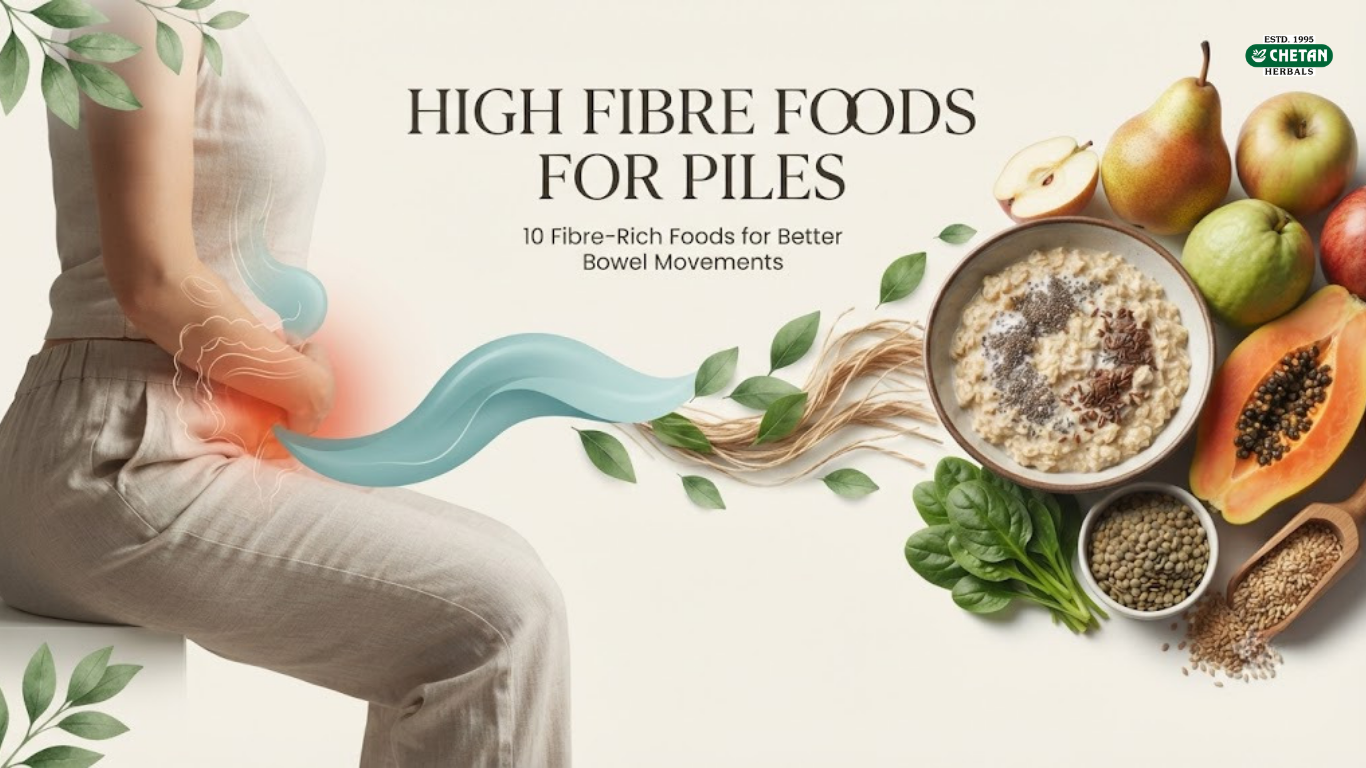
Piles, also called hemorrhoids, can become uncomfortable when constipation, hard stools, or excessive straining during bowel movements are involved. One simple dietary step that may support better bowel habits is increasing fibre through a balanced diet. High fibre foods for piles can help add bulk to stools and make them easier to pass, which may reduce the need for straining.
Fibre works best when combined with adequate fluid intake, regular physical activity, and healthy toilet habits. Instead of depending on one particular food, it is better to include a variety of fruits, vegetables, whole grains, legumes, nuts, and seeds in your daily meals.
What Are the Best High Fibre Foods for Piles?
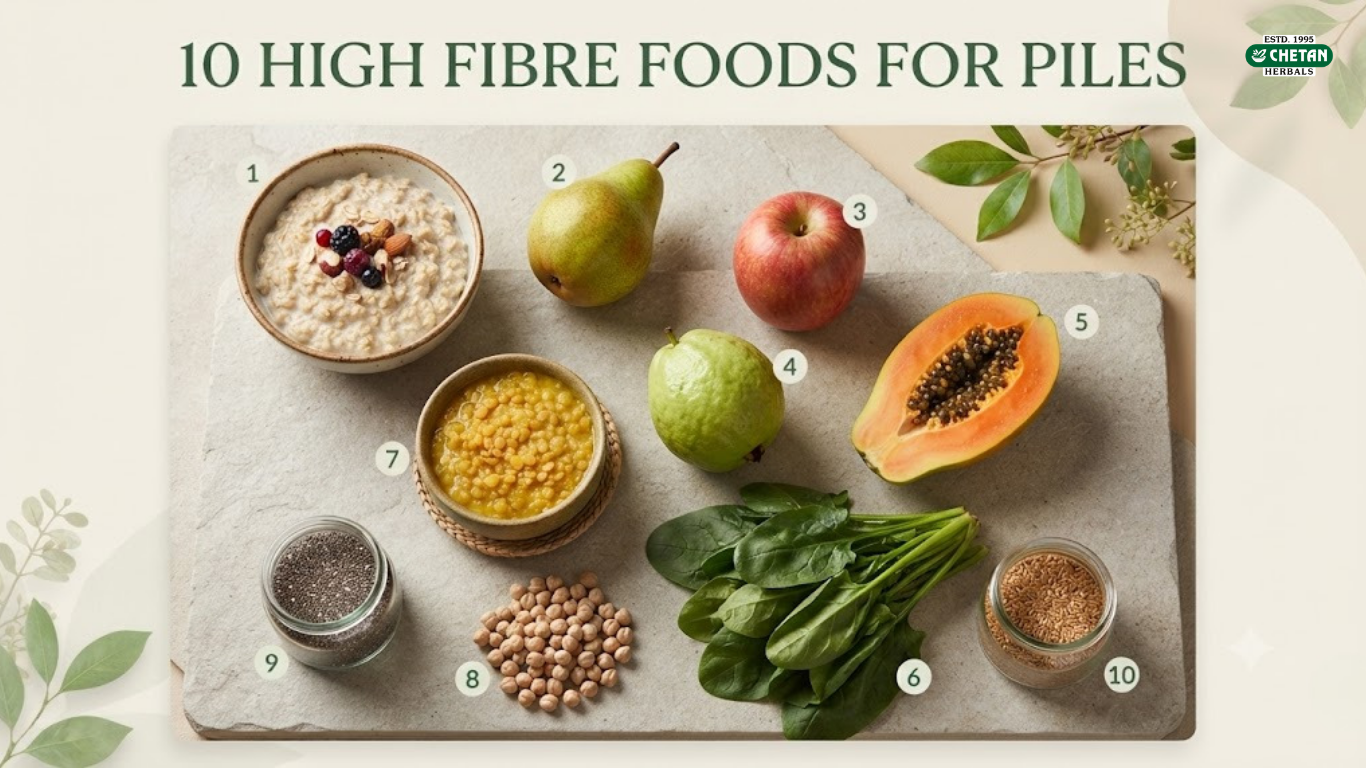
Some useful fibre rich foods for piles and hemorrhoids include oats, pears, apples with their skin, guava, papaya, vegetables, lentils, chickpeas, beans, chia seeds, flaxseeds, and whole grains.
These foods for piles and constipation can support regular bowel movements and help produce softer, easier-to-pass stools. Adults generally need around 22–34 grams of fibre per day, although individual requirements can vary.
If your current diet is low in fibre, increase it gradually. A sudden increase may cause gas, bloating, or abdominal discomfort.
High fibre foods for piles
Why Is Fibre Important for Piles?
Constipation and straining can contribute to hemorrhoid discomfort. When stools become hard or difficult to pass, a person may spend more time on the toilet or strain excessively.
A diet containing adequate fibre can help improve stool bulk and consistency. This is why fibre is commonly included as part of dietary management for constipation and hemorrhoid symptoms.
Along with choosing high fibre foods for hemorrhoids, maintaining adequate hydration, staying physically active, and avoiding unnecessary straining can support a healthier bowel routine.
10 High Fibre Foods for Piles
1. Oats
Oats are an easy way to add fibre to breakfast. You can prepare oatmeal with milk or a suitable alternative and add fruits, chia seeds, or ground flaxseeds.
For people following a high fibre diet for piles, replacing a low-fibre breakfast with oats can be a simple and practical dietary change.
2. Pears
Pears are a convenient fibre-containing fruit. When properly washed, eating the fruit with its skin can provide additional fibre.
A medium pear provides about 5.5 grams of fibre according to nutrition information from the U.S. National Institute of Diabetes and Digestive and Kidney Diseases (NIDDK).
You can have a pear as a snack or add sliced pear to oatmeal or a fruit bowl.
3. Apples
Apples with their skin are another useful food for piles and constipation. A medium apple with skin provides around 4.8 grams of fibre according to NIDDK information.
Eating the whole fruit is preferable to relying mainly on fruit juice when your goal is to increase dietary fibre.
4. Guava
Guava can be included in a balanced diet as a fibre-containing fruit. It makes a convenient snack and can also be included in a mixed fruit bowl.
If you are gradually increasing your fibre intake, introduce fruits and other high-fibre foods slowly according to your digestive tolerance.
5. Papaya
Papaya is commonly eaten in India and can be included as part of a balanced, fibre-containing diet.
It can be one of the foods to eat for piles when the overall goal is to improve dietary fibre intake and maintain regular bowel habits.
However, papaya should not be considered a standalone treatment or cure for hemorrhoids.
6. Lentils and Dal
Dal, lentils, chickpeas, and beans are useful plant-based sources of dietary fibre.
For an Indian-style diet for hemorrhoids, adding dal with vegetables and whole-wheat roti can be an easy way to increase fibre without making major changes to regular meals.
If your diet is currently low in fibre, start with moderate portions and gradually increase them to reduce the possibility of gas or bloating.
7. Green Vegetables
Vegetables such as peas, broccoli, carrots, leafy greens, and other fibre-containing vegetables can contribute to daily fibre intake.
Try including vegetables with lunch and dinner instead of relying mainly on refined grains or highly processed foods.
Eating a variety of vegetables also provides different nutrients and can make your overall diet more balanced.
8. Chia Seeds
Chia seeds contain dietary fibre and can be added to oatmeal, curd, smoothies, or other meals.
When increasing fibre intake, remember to maintain adequate fluid intake because fluids help support the normal functioning of dietary fibre.
There is no need to consume excessive amounts. Start with a small quantity and gradually adjust according to your dietary needs.
9. Flaxseeds
Ground flaxseeds can be added to oats, smoothies, curd, or meals. They provide dietary fibre and can be part of a varied diet.
For people looking for foods that soften stool, fibre-containing foods such as flaxseeds may be useful as part of a broader dietary routine.
As with other high-fibre foods, gradually increasing intake may be more comfortable than suddenly consuming a large quantity.
10. Whole Grains
Whole-wheat foods, oats, bran, and other whole grains can provide more fibre than many refined grain products.
Choosing whole-wheat roti or other whole-grain foods more often can help increase dietary fibre.
Combining whole grains with vegetables, dal, beans, fruits, and seeds can create a more balanced high fibre diet for piles.
How Much Fibre Should You Eat for Piles?
There is no single fibre target that applies to everyone. NIDDK notes that adults generally need around 22–34 grams of fibre per day, depending on factors such as age and sex.
If your current diet is low in fibre, do not suddenly add a large amount. Increase fibre gradually and drink adequate fluids.
A sudden increase in fibre may cause gas, bloating, or abdominal discomfort in some people. The goal should be to develop a sustainable eating pattern rather than make a drastic short-term dietary change.
Is Water Important When Eating More Fibre?
Yes. Adequate fluids are important when increasing fibre intake. Fibre and fluids work together to support softer and easier-to-pass stools.
Your individual fluid needs can vary depending on your activity level, climate, overall health, and other factors. If you have a medical condition requiring fluid restriction, follow your healthcare professional’s advice.
Foods and Habits to Limit When You Have Piles
When constipation is an issue, it can help to reduce dependence on foods that contain little or no fibre, such as highly processed snacks, chips, fast food, and refined grain products.
You should also avoid unnecessary straining and spending excessive time on the toilet.
Remember that a healthy diet for piles and constipation is not about avoiding every food. It is about creating a balanced routine with enough fibre, fluids, and nutritious whole foods.
Dr. Chetan Gupta’s Advice
“Piles management should not focus on one food alone. A regular bowel routine, adequate fibre, sufficient fluids, physical activity, and avoiding unnecessary straining are important parts of everyday care. If your usual diet is low in fibre, increase it gradually rather than making a sudden change. Persistent bleeding or significant pain should not simply be attributed to piles without appropriate medical evaluation.”
High fibre foods for piles
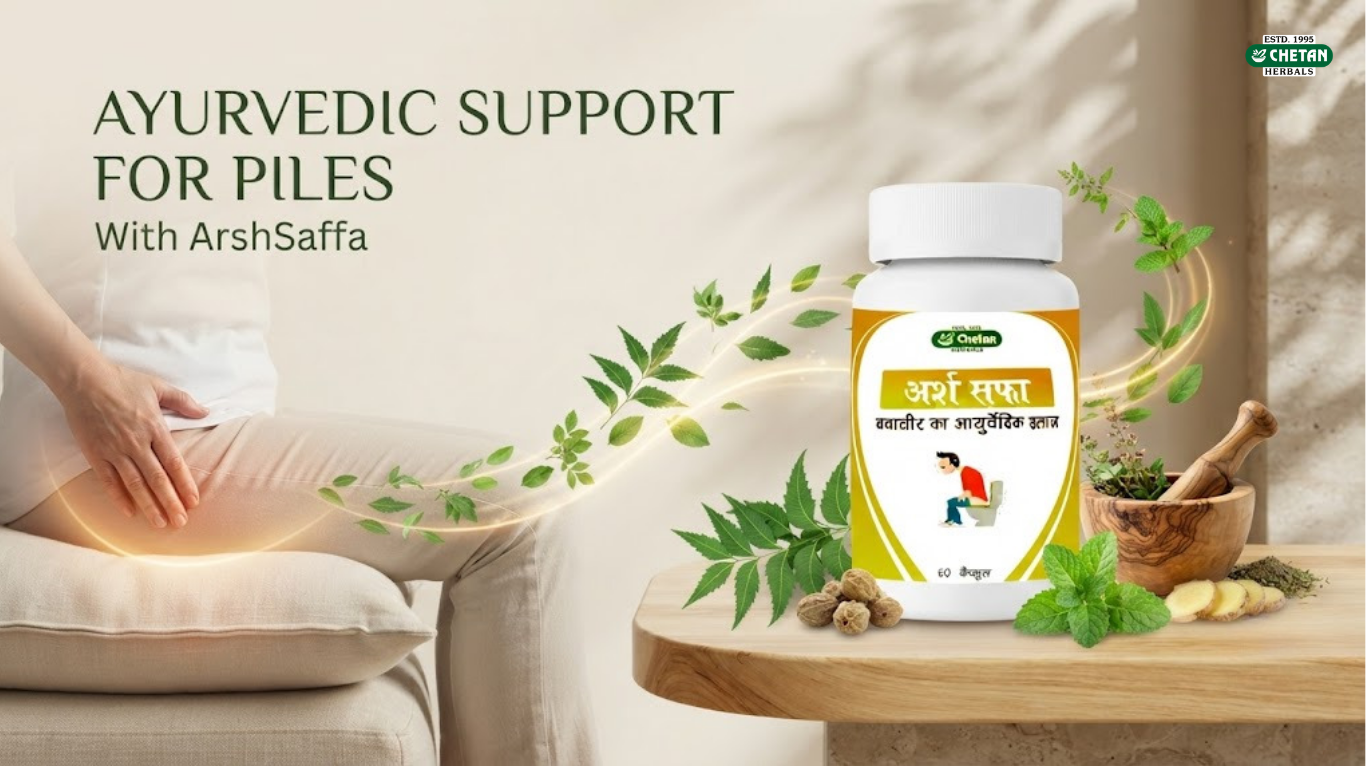
Ayurvedic Support for Piles with ArshSaffa
From an Ayurvedic wellness perspective, maintaining healthy digestion and regular bowel habits is an important part of overall digestive wellness.
Along with a balanced fibre-rich diet and healthy lifestyle habits, some people may consider an Ayurvedic product as part of their routine.
Chetan Herbals ArshSaffa Piles Capsule is an Ayurvedic option positioned as supportive care for piles and hemorrhoid-related wellness. It should be considered alongside healthy dietary and lifestyle practices and should not replace appropriate medical evaluation when symptoms are persistent or severe.
When Should You See a Doctor?
Not every symptom around the anus is caused by hemorrhoids. Rectal bleeding can have several possible causes and should not automatically be assumed to be piles.
Seek medical advice if you experience rectal bleeding, persistent symptoms, significant pain, or symptoms that do not improve with appropriate home care.
Severe anal pain accompanied by rectal bleeding, abdominal discomfort, diarrhea, or fever requires prompt medical attention.
Frequently Asked Questions
What are the best high fibre foods for piles?
Oats, pears, apples with skin, guava, papaya, vegetables, lentils, beans, chickpeas, chia seeds, flaxseeds, and whole grains are useful fibre-containing foods that can be included in a balanced diet.
Is papaya good for piles?
Papaya can be included as part of a balanced, fibre-containing diet. However, it should not be considered a standalone treatment for hemorrhoids.
Are oats good for piles?
Yes. Oats are a convenient source of dietary fibre and can be included as part of a high-fibre breakfast or daily meal plan.
Can fibre help with constipation and piles?
Yes. Increasing dietary fibre can help produce softer, easier-to-pass stools and may reduce straining associated with constipation and hemorrhoid discomfort.
Should I increase fibre suddenly?
No. Increase fibre gradually and maintain adequate fluid intake. A sudden increase may cause gas or bloating.
Conclusion
Choosing the right high fibre foods for piles can be a practical part of maintaining a healthy bowel routine. Fruits such as pears, apples, guava, and papaya, along with oats, vegetables, dal, beans, seeds, and whole grains, can help increase daily fibre intake.
A high fibre diet for piles works best when combined with adequate fluids, regular physical activity, healthy toilet habits, and avoiding excessive straining.
Rather than depending on one food or quick fix, focus on a consistent and balanced routine. If you experience persistent bleeding, significant pain, or symptoms that do not improve, appropriate medical evaluation is important.




Write a comment
Your email address will not be published. All fields are required