

Thick white cloudy discharge is a type of vaginal discharge that may occur due to normal hormonal changes, ovulation, pregnancy or vaginal infections. Normal vaginal discharge is usually clear, milky white or slightly creamy and does not have a strong unpleasant smell. However, if it is accompanied by itching, burning, irritation, unusual odour or pelvic pain, it may indicate an underlying infection that needs medical evaluation.
Is Thick White Cloudy Discharge Normal?
In many cases, thick white discharge is completely normal. Healthy vaginal discharge may appear clear, milky white or slightly creamy.
Normal vaginal discharge generally:
- Does not have a strong or unpleasant smell.
- Does not cause itching, burning or irritation.
- May become thicker during certain stages of the menstrual cycle.
- Helps maintain natural vaginal moisture.
- May increase due to hormonal changes.
However, cloudy white vaginal discharge accompanied by itching, redness, swelling or an unusual smell may indicate an infection or another condition requiring medical attention.
thick white cloudy discharge
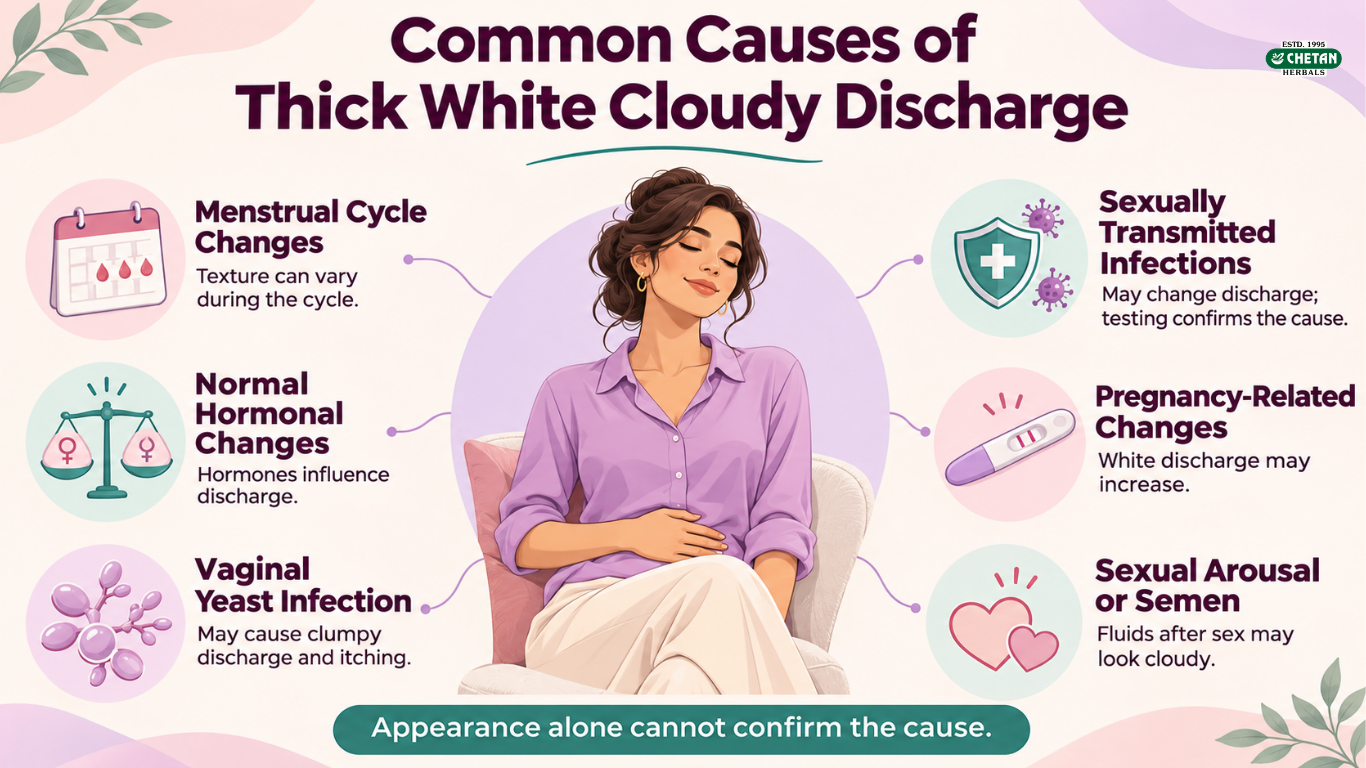
Common Causes of Thick White Cloudy Discharge
Several factors can affect vaginal discharge. Understanding the possible causes can help women recognise when a change is normal and when medical advice may be needed.
1. Hormonal Changes
Oestrogen and progesterone influence vaginal fluid production. Hormonal fluctuations during the menstrual cycle can change the amount and consistency of vaginal discharge.
This is one reason some women experience thick white discharge before period. It may also become creamy or sticky during different stages of the menstrual cycle.
2. Vaginal Yeast Infection
A vaginal yeast infection occurs when Candida, a type of fungus naturally present in the body, grows excessively.
It may cause thick white discharge with itching, which sometimes resembles cottage cheese. Other symptoms include:
- Vaginal itching and irritation.
- Redness and swelling.
- Burning sensation.
- Discomfort during sexual intercourse.
- Burning while urinating due to external irritation.
A healthcare professional can confirm the diagnosis because similar symptoms may occur with other vaginal conditions.
3. Pregnancy-Related Hormonal Changes
Hormonal changes during pregnancy can increase vaginal discharge. This is commonly known as leukorrhea.
White discharge during pregnancy is generally thin or milky white and usually does not have a strong smell or cause irritation.
However, discharge accompanied by bleeding, itching, pain or an unpleasant smell should be evaluated by a healthcare professional.
4. Bacterial Vaginosis (BV)
Bacterial vaginosis occurs when the natural balance of bacteria in the vagina changes.
It commonly causes thin white or greyish discharge with a fishy smell, particularly after sexual intercourse. Some women may not experience itching or irritation.
Proper diagnosis is important because bacterial vaginosis requires a different treatment approach from a yeast infection.
5. Sexually Transmitted Infections (STIs)
Certain sexually transmitted infections, including trichomoniasis, chlamydia and gonorrhoea, can cause unusual vaginal discharge.
Possible symptoms include:
- Yellowish or greenish discharge.
- Unpleasant vaginal odour.
- Burning during urination.
- Pelvic discomfort.
- Pain during sexual intercourse.
Some infections may not cause noticeable symptoms. Medical testing is important when an STI is suspected.
6. Menstrual Cycle Changes
Vaginal discharge naturally changes throughout the menstrual cycle.
Some women notice creamy white discharge after ovulation, while others experience thicker discharge before menstruation. These changes are generally normal when there is no unpleasant smell, itching or discomfort.
Thick White Discharge Without Itching – What Does It Mean?
Thick white discharge without itching is often associated with normal hormonal changes and the natural functioning of the reproductive system.
If the discharge is white, has no strong unpleasant smell and is not accompanied by discomfort, it may not indicate an infection.
However, if the discharge becomes unusually thick, changes suddenly or continues with other unusual symptoms, consult a gynaecologist for proper evaluation.
Symptoms That May Accompany Abnormal Vaginal Discharge
Not every change in vaginal discharge indicates a health problem. However, certain symptoms may suggest an underlying infection or gynaecological condition.
Watch for:
- Persistent vaginal itching or irritation.
- Burning sensation during urination.
- Strong or fishy vaginal odour.
- Redness or swelling around the vaginal area.
- Pain during sexual intercourse.
- Pelvic or lower abdominal pain.
- Unusual yellow, green or grey discharge.
- Bleeding between periods or after sexual intercourse.
These symptoms should not be ignored. Seek prompt medical attention if you experience fever, significant pelvic pain or unusual bleeding.
How Is Abnormal Vaginal Discharge Diagnosed?
Diagnosis depends on the symptoms, medical history and physical examination.
A healthcare professional may recommend:
- Vaginal examination.
- Vaginal swab testing.
- Microscopic examination of vaginal fluid.
- Laboratory tests for suspected infections.
- STI testing when relevant.
Identifying the underlying cause is important because different vaginal infections require different treatments.
Avoid using random antibiotics, antifungal medicines or vaginal washes without appropriate medical advice.
Treatment for Thick White Cloudy Discharge
The appropriate treatment depends on the underlying cause.
- Yeast infection: Antifungal treatment may be recommended after diagnosis.
- Bacterial vaginosis: A healthcare professional may prescribe suitable antibiotics.
- STIs: Specific treatment is required depending on the infection, and sexual partners may also need evaluation.
- Normal hormonal changes: Usually do not require medical treatment.
There is no single treatment for every type of white vaginal discharge. Self-medication may delay the correct diagnosis and treatment.
Ayurvedic Support for Women’s Wellness
Ayurveda emphasises overall health through balanced nutrition, healthy daily routines and individualised care.
Traditional Ayurvedic herbs such as Shatavari and Ashoka are used in women’s wellness formulations. Other herbs, including Manjistha, Guduchi and Jatamansi, also have traditional applications in Ayurvedic practices.
However, traditional use does not establish that these herbs can treat vaginal infections or replace medically recommended treatment.
thick white cloudy discharge
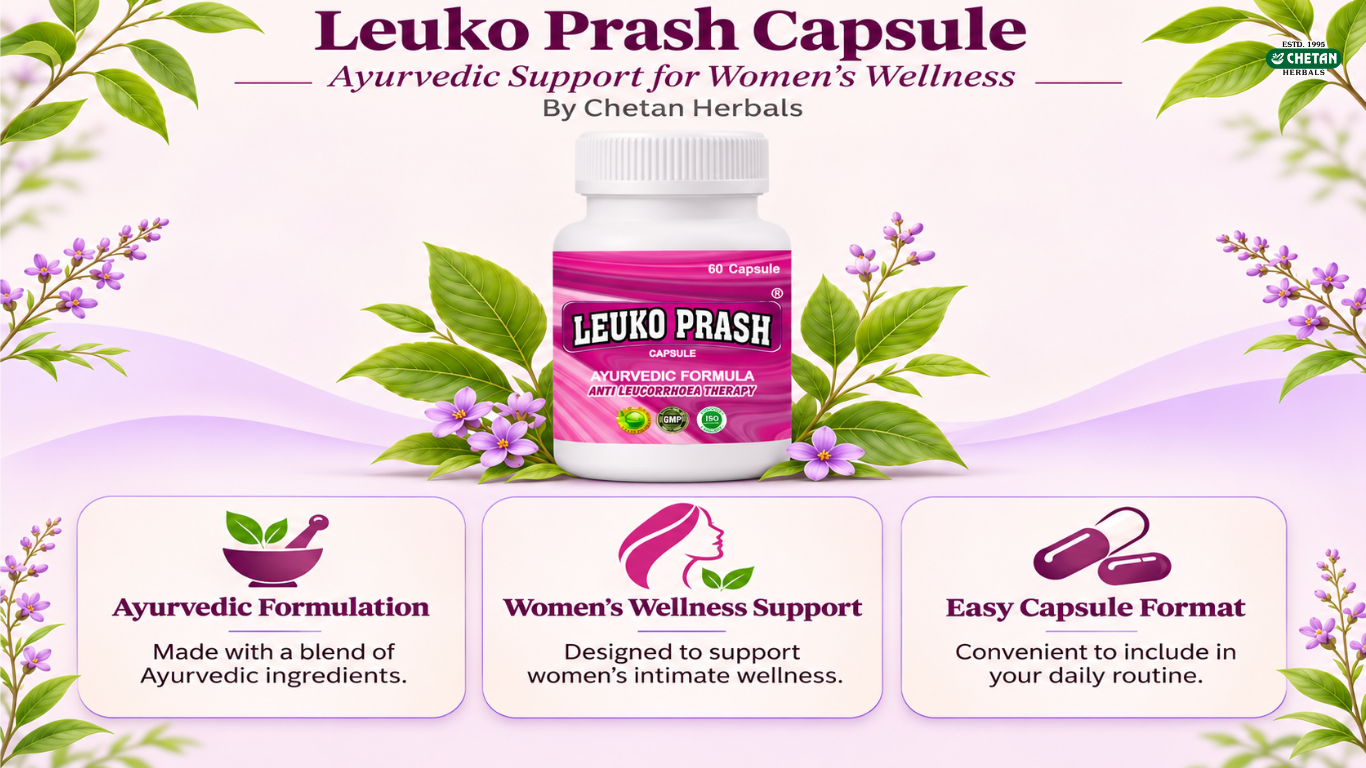
Explore Leuko Prash Capsule by Chetan Herbals
Chetan Herbals offers Leuko Prash Capsule, an Ayurvedic women’s wellness formulation positioned for white discharge support.
The product information mentions traditional Ayurvedic ingredients such as:
- Shatavari
- Ashoka
- Manjistha
- Gokshura
- Guduchi
- Jatamansi
Women interested in this formulation can review its ingredients, product information and directions for use before considering it.
How to Maintain Vaginal Hygiene and Health
Following simple hygiene habits can support everyday vaginal health.
- Wear breathable cotton underwear.
- Avoid scented vaginal washes and harsh soaps.
- Change out of wet or sweaty clothes promptly.
- Maintain proper hydration and a balanced diet.
- Avoid douching or washing inside the vagina.
- Avoid self-medication for unusual discharge.
- Seek medical advice if symptoms persist or worsen.
The vagina naturally maintains its own balance, so excessive cleaning or internal washing is unnecessary.
Dr. Chetan Gupta’s Advice
Vaginal discharge is a natural part of women’s reproductive health, and every change does not necessarily indicate a disease. Normal discharge may vary in quantity and consistency throughout the menstrual cycle.
However, women should pay attention to unusual changes, particularly when discharge is accompanied by itching, burning, unpleasant odour or pelvic discomfort.
The most important step is identifying the underlying cause rather than simply trying to reduce discharge. Proper medical evaluation helps determine whether the change is related to normal hormonal activity or an underlying infection.
Frequently Asked Questions
1. What causes thick white cloudy discharge?
It may occur due to normal hormonal changes, menstrual cycle variations, pregnancy or vaginal infections such as yeast infections.
2. Is thick white discharge without itching normal?
Yes. It can be normal when there is no unpleasant smell, irritation or discomfort. However, persistent or unusual changes should be evaluated.
3. Can a yeast infection cause thick white discharge?
Yes. A vaginal yeast infection can cause thick, white, cottage-cheese-like discharge along with itching, redness, irritation and soreness.
4. Does thick white discharge mean pregnancy?
Not necessarily. Increased white discharge can occur during pregnancy, but it is not a reliable pregnancy indicator. A pregnancy test is needed to confirm pregnancy.
5. Why do I experience thick white discharge before my period?
Hormonal fluctuations during the menstrual cycle can increase or change vaginal discharge. Creamy or thicker white discharge before menstruation can be normal if there are no other symptoms.
6. Can thick white discharge be a sign of infection?
Yes. Thick white discharge accompanied by itching, irritation, redness or discomfort may indicate a yeast infection. Other infections can also cause abnormal discharge.
7. When should I consult a doctor for white discharge?
Consult a healthcare professional if discharge is accompanied by itching, burning, unpleasant smell, pelvic pain, fever, bleeding or unusual colour changes.
8. Can Ayurvedic herbs support women’s wellness?
Certain Ayurvedic herbs are traditionally used in women’s wellness formulations. However, their effectiveness for treating specific vaginal conditions should not be assumed without appropriate scientific evidence.






Write a comment
Your email address will not be published. All fields are required