

What Is Weight Loss Medication?
Weight loss medication refers to medicines prescribed to help eligible individuals manage overweight or obesity. These medicines may work by reducing appetite, increasing feelings of fullness, or affecting how the body absorbs certain nutrients. The appropriate option depends on a person’s health, weight, medical history, and treatment goals.
Many people search online for weight loss medicine or medication for weight loss when diet and exercise alone have not produced the desired results. However, not every person needs medication to lose weight. A healthcare professional can assess whether medical treatment is appropriate.
Weight management usually involves a combination of balanced nutrition, regular physical activity, adequate sleep, and long-term lifestyle changes.
Types of Weight Loss Medication
Different types of weight management medication work in different ways. Some are available only with a prescription and require medical supervision.
1. Prescription Weight Loss Medicines
Certain prescription medicines help regulate appetite or increase the feeling of fullness. Some medicines affect fat absorption. Depending on the medicine and the person’s health, they may be considered as part of a medically supervised weight loss treatment plan.
These medicines are not suitable for everyone. A qualified healthcare professional should evaluate their potential benefits, risks, interactions, and suitability before prescribing them.
2. Weight Loss Pills and Supplements
People also search for weight loss pills and non-prescription supplements marketed for weight management. These products may contain different ingredients and should not be assumed to have the same effectiveness or safety as approved prescription medicines.
Before choosing any supplement, check its ingredients, label instructions, manufacturing information, and applicable regulatory details. Avoid products that promise dramatic weight loss in a few days or guarantee results without diet and exercise.
3. Ayurvedic Weight Management Support
Ayurvedic products are another option people explore while working towards their weight management goals. An Ayurvedic weight loss capsule may be marketed as a supplement to a healthy routine, but its effectiveness depends on the specific formulation and the evidence available for its ingredients.
Natural does not automatically mean risk-free. Herbal products can cause adverse effects or interact with medicines. Professional guidance is particularly important for people with existing medical conditions.
Who May Need Weight Loss Medication?
Weight loss medication may be considered for certain individuals with overweight or obesity when lifestyle changes alone have not been sufficient.
A healthcare professional may assess:
- Body mass index (BMI) and overall health.
- Blood pressure and blood sugar levels.
- Existing medical conditions and family history.
- Current medicines and supplements.
- Previous weight management efforts.
- Potential benefits, risks, and treatment costs.
Medication should not be selected solely because a person wants to lose weight quickly. The goal is to improve health and support sustainable weight management rather than pursue an unrealistic body shape.
Weight Loss Medication
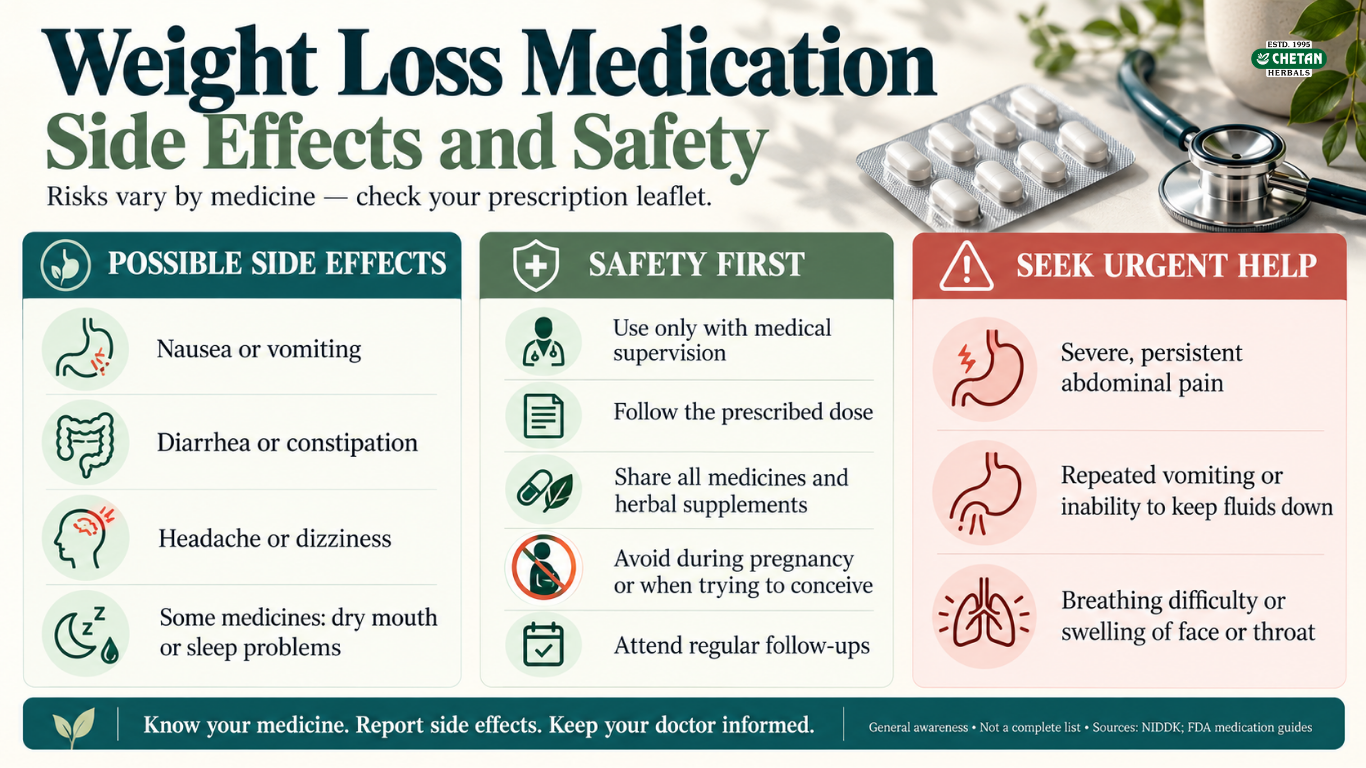
Weight Loss Medication Side Effects and Safety
Understanding weight loss medication side effects is essential before starting any treatment. Depending on the medicine, possible effects may include nausea, constipation, diarrhoea, digestive discomfort, dry mouth, or changes in heart rate and blood pressure.
Some medicines can cause more serious complications or interact with other treatments. Prescription medicines should only be used as directed by a qualified healthcare professional.
Keep these safety points in mind:
- Never use someone else’s prescription medicine.
- Avoid unverified products promising instant results.
- Inform your healthcare professional about all medicines and supplements you take.
- Seek advice before using weight-loss products during pregnancy or breastfeeding.
- Do not stop or change a prescribed medicine without professional guidance.
Weight management is a gradual process. A safe treatment plan should consider both weight-related goals and overall well-being.
Can Ayurveda Support Natural Weight Management?
Natural weight management focuses on sustainable habits that support overall health. Ayurveda traditionally considers factors such as dietary habits, digestion, daily routine, and physical activity when discussing well-being.
Practical habits that can support weight management include:
- Eat balanced meals with vegetables, protein sources, whole grains, and appropriate portions.
- Reduce frequent consumption of sugary drinks and highly processed foods.
- Include regular walking or other physical activities suited to your fitness level.
- Maintain a consistent sleep schedule.
- Monitor your progress without relying on crash diets or extreme restrictions.
Ayurvedic approaches may complement a healthy lifestyle, but they should not replace necessary medical care. Claims about fat burning, appetite control, or specific amounts of weight loss should be supported by reliable evidence.
Weight Loss Medication
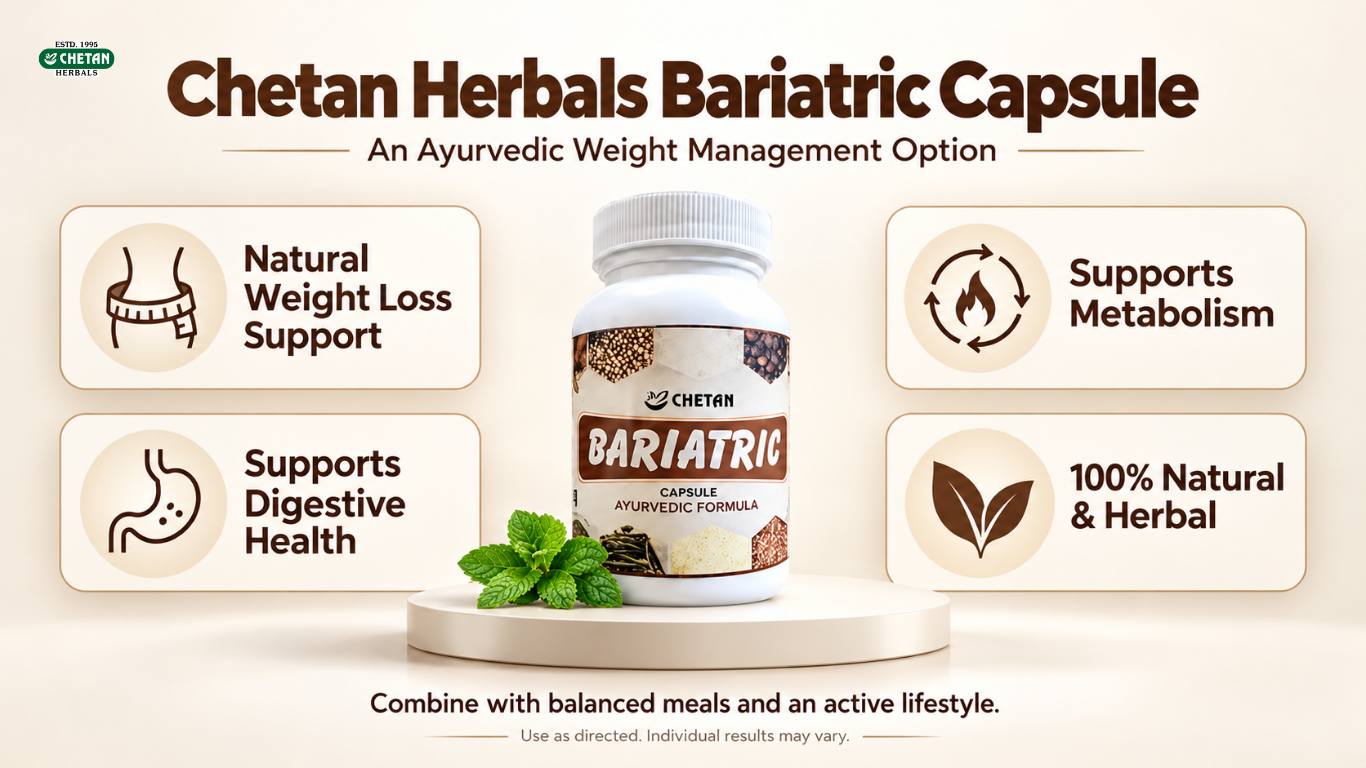
Chetan Herbals Bariatric Capsule: An Ayurvedic Weight Management Option
Chetan Herbals offers Bariatric Capsule, an Ayurvedic product designed to support your weight management journey. If you are looking for an Ayurvedic weight loss capsule to complement your daily routine, Bariatric Capsule can be considered as an option alongside balanced nutrition and regular physical activity.
Its Ayurvedic formulation is intended to support your weight management goals as part of a healthy lifestyle. For better results, focus on nutritious meals, regular exercise, adequate sleep, and consistent daily habits. Remember that weight management takes time, and individual results may vary.
Healthy Habits to Support Your Weight Loss Treatment
Whether you are considering medication, an Ayurvedic supplement, or lifestyle changes alone, everyday habits remain important.
Focus on consistency rather than quick results. Choose nutritious foods, maintain regular activity, drink enough water, and get sufficient sleep. If your weight changes unexpectedly or you find it difficult to manage despite consistent efforts, discuss possible contributing factors with a healthcare professional.
A personalised approach can help identify realistic goals and reduce the risks associated with extreme dieting or unsuitable products.
Frequently Asked Questions
1. What is the best weight loss medication?
There is no single best option for everyone. The appropriate medicine depends on medical history, weight-related health risks, possible side effects, and professional assessment.
2. Are weight loss pills safe?
Safety varies according to the ingredients and formulation. Prescription medicines require appropriate supervision, while supplements should be checked carefully for quality, interactions, and evidence.
3. Can Ayurvedic weight loss capsules replace prescription medicines?
No. Ayurvedic supplements should not automatically be considered substitutes for prescribed medicines. Discuss any planned changes to your treatment with your healthcare professional.
4. Can I lose weight without medication?
Many people can improve weight management through balanced nutrition, regular physical activity, sleep, and consistent lifestyle changes. Some individuals may benefit from additional medical support.
5. How quickly should I expect results?
Results vary according to individual health, eating patterns, activity levels, and treatment. Be cautious of products promising a fixed amount of weight loss within a short period.
Conclusion
Weight loss medication can be helpful for eligible individuals when selected and monitored appropriately. However, safe and sustainable weight management involves more than taking a pill or supplement. Balanced nutrition, regular activity, professional guidance, and realistic expectations all play important roles.
If you are exploring Ayurvedic options, review the product information for Chetan Herbals Bariatric Capsule and seek professional advice about its suitability. Make informed decisions based on safety, credible evidence, and your individual health needs.





Write a comment
Your email address will not be published. All fields are required