
Cervical mucus is a natural fluid produced by the cervix, the lower part of the uterus that connects to the vagina. Its amount, texture, and appearance can change throughout the menstrual cycle because of hormonal changes.
Many women notice cervical mucus as vaginal or white discharge and may wonder whether it is normal, related to ovulation, or a sign of pregnancy. Understanding these changes can help you better understand your menstrual cycle and fertile days.
What Is Cervical Mucus?
Cervical mucus is produced by glands in and around the cervix. Its consistency changes during different stages of the menstrual cycle.
Depending on the hormonal phase, cervical mucus may appear:
- Clear and watery
- White or creamy
- Sticky or thick
- Slippery and stretchy
Therefore, cervical mucus and white discharge can sometimes look similar, but they are not always exactly the same thing. Normal vaginal discharge can contain cervical mucus along with other natural vaginal secretions.
Cervical mucus also has an important role in reproductive health. Around ovulation, changes in its texture can make it easier for sperm to move through the reproductive tract.
Cervical Mucus During the Menstrual Cycle
The appearance of cervical mucus during the menstrual cycle is not the same every day. Hormonal changes, particularly changes in estrogen and progesterone, influence its consistency.
1. During the Period
Menstrual bleeding generally makes cervical mucus difficult to observe. Some women may notice little or no noticeable mucus during this stage.
2. After the Period
After menstruation, cervical mucus may be relatively dry, sticky, or thick. Some women may notice very little discharge during this phase.
3. Before Ovulation
As ovulation approaches, estrogen levels increase. The mucus may gradually become wetter, clearer, and more slippery.
This change is one reason people search for cervical mucus before ovulation when trying to understand their fertile window.
4. Around Ovulation
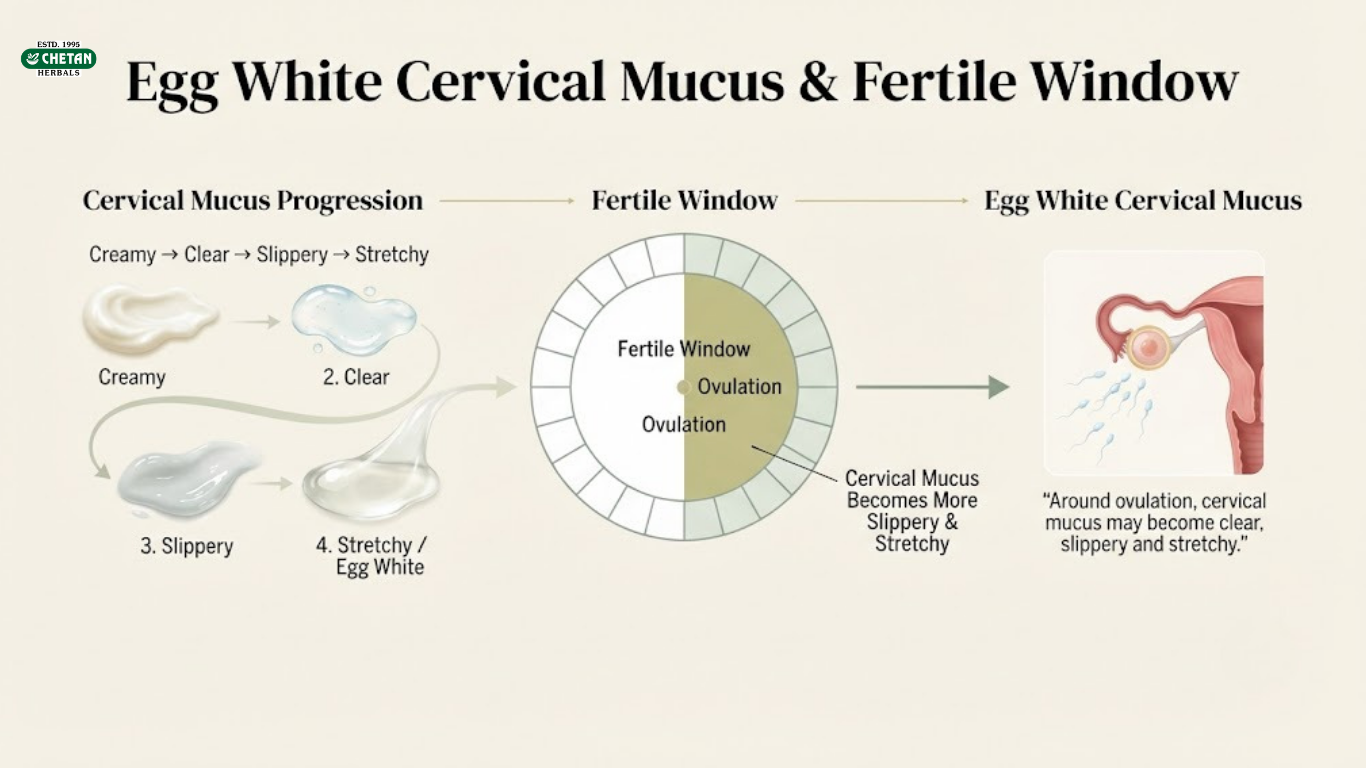
Near ovulation, cervical mucus can become clear, slippery, and stretchy. It may resemble the consistency of raw egg white, which is why it is often called egg white cervical mucus.
This type of mucus is commonly associated with the fertile phase of the menstrual cycle.
5. After Ovulation
After ovulation, progesterone becomes more dominant. Cervical mucus often becomes thicker, creamier, stickier, or less noticeable.
Therefore, cervical mucus after ovulation can look quite different from the mucus seen around the fertile window.
What Is Egg White Cervical Mucus?
Egg white cervical mucus is a term used to describe mucus that is usually clear, slippery, and stretchy.
For some women, this type of mucus appears around ovulation and may indicate that they are close to or within their fertile window.
However, not every woman will notice the classic egg-white appearance. Cervical mucus patterns can vary from person to person and from cycle to cycle.
Cervical Mucus
Cervical Mucus and Fertile Window
One of the most useful things about observing fertile cervical mucus is that it can provide a natural clue about changes occurring around ovulation.
As ovulation approaches, mucus often becomes more fluid and slippery. This environment can help sperm move through the cervix.
However, cervical mucus alone cannot confirm the exact day of ovulation. Cycle length, hormonal variations, stress, illness, medications, breastfeeding, and other factors can affect mucus patterns.
Women who are tracking fertility may therefore combine cervical mucus observation with other methods, such as cycle tracking or ovulation testing.
Is Cervical Mucus the Same as White Discharge?
A common question is: “Is cervical mucus white discharge?”
Sometimes, yes. Cervical mucus can be white or creamy, particularly during certain stages of the menstrual cycle. But vaginal discharge can have multiple components and can change naturally throughout the cycle.
Normal discharge is generally not associated with strong unpleasant odor, significant itching, burning, or pelvic pain.
So, seeing white discharge does not automatically mean that something is wrong.
What Can Cause Changes in Cervical Mucus?
Several factors can influence cervical mucus discharge, including:
- Hormonal changes during the menstrual cycle
- Ovulation
- Pregnancy-related hormonal changes
- Sexual arousal
- Hormonal contraception
- Breastfeeding
- Stress and lifestyle changes
- Certain medicines
- Vaginal infections
Because of these factors, mucus should be interpreted in the context of the person’s overall symptoms and menstrual pattern.
Can Cervical Mucus Indicate Pregnancy?
Some women notice changes in discharge during early pregnancy because hormonal changes can increase vaginal secretions. However, cervical mucus during pregnancy is not a reliable way to confirm pregnancy.
If pregnancy is suspected, a pregnancy test is a more appropriate way to check.
Similarly, cervical mucus alone should not be used to diagnose a reproductive or vaginal health condition.
When Should White Discharge Be Checked?
Normal white or clear discharge usually does not require treatment. However, medical advice is appropriate when discharge is accompanied by symptoms such as:
- Strong or unpleasant odor
- Persistent itching
- Burning or irritation
- Pain during urination
- Pelvic pain
- Unusual green, grey, or yellow discharge
- Blood when it is not related to menstruation
- A sudden or persistent change from your usual pattern
These symptoms can have different causes, including infections, and should be evaluated rather than self-treated based only on the appearance of discharge.

Cervical Mucus
Ayurvedic Support for White Discharge Concerns
For women who experience persistent or bothersome white-discharge-related concerns, Ayurveda focuses on overall women’s wellness, individual constitution, lifestyle, diet, and the nature of the symptoms.
Leukoprash by Chetan Herbals is an Ayurvedic product positioned as a supportive option for women’s wellness and white-discharge-related concerns. It should not be considered a treatment for every type of vaginal discharge, because the underlying cause can vary.
If discharge is associated with infection-like symptoms, pain, unusual odor, or other concerning changes, appropriate healthcare evaluation should come first.
Dr. Chetan Gupta’s Advice
Vaidya Dr. Chetan Gupta, BAMS / Ayurvedic Sexologist & Counselor, advises that women should not consider every type of white discharge abnormal. Cervical mucus naturally changes throughout the menstrual cycle, particularly around ovulation.
The important point is to understand your usual pattern rather than becoming concerned about every change in discharge. If the discharge is persistent, unusual for you, or accompanied by itching, burning, odor, pain, or other symptoms, it is better to seek appropriate professional advice instead of relying on self-diagnosis.
Frequently Asked Questions
What is cervical mucus?
Cervical mucus is a natural secretion produced by the cervix. Its texture and amount change during different stages of the menstrual cycle.
What does cervical mucus look like during ovulation?
During ovulation, cervical mucus may become clear, slippery, and stretchy, sometimes resembling raw egg white.
Is white cervical mucus normal?
White or creamy cervical mucus can be normal, depending on the stage of the menstrual cycle. Other symptoms should also be considered.
Is cervical mucus a sign of pregnancy?
Changes in cervical mucus can occur during pregnancy, but mucus alone cannot reliably confirm pregnancy. A pregnancy test is more appropriate for confirmation.
Does cervical mucus mean ovulation is happening?
Changes toward clear, slippery, stretchy mucus can indicate that the fertile phase is approaching, but cervical mucus alone cannot confirm the exact timing of ovulation.
Conclusion
Cervical mucus is a normal part of the female reproductive system and changes naturally throughout the menstrual cycle. It may be sticky, creamy, white, clear, watery, or stretchy depending on hormonal changes.
Understanding cervical mucus before ovulation, egg white cervical mucus, cervical mucus after ovulation, and the relationship between cervical mucus and white discharge can help women better understand their menstrual and reproductive health.
Most importantly, normal discharge should not automatically be treated as a health problem. If discharge is accompanied by unusual odor, itching, burning, pain, or a significant change from your normal pattern, professional evaluation is recommended. For women looking for an Ayurvedic wellness option for white-discharge-related concerns, Chetan Herbals offers Ayurvedic products such as Leukoprash as a supportive option, based on individual needs and professional guidance.






Write a comment
Your email address will not be published. All fields are required