

Can diabetics eat bananas? Yes, in most cases, people with diabetes can include bananas in their diet. Having diabetes does not automatically mean that you need to stop eating bananas or other whole fruits. However, portion size, ripeness, total carbohydrate intake and overall meal composition are important factors to consider.
Bananas contain carbohydrates along with fibre, vitamins and minerals. The American Diabetes Association includes bananas among fruits that can fit into a diabetes meal plan when their carbohydrate contribution is considered as part of the overall diet.
So, instead of asking whether banana is completely “good” or “bad” for diabetes, it is more useful to understand how much banana you eat and how it fits into your individual meal plan.
Can Diabetics Eat Bananas?
Yes. Can diabetic patients eat bananas? For most people, bananas can be included in a balanced diet when the portion is appropriate for their individual carbohydrate needs.
Like other fruits, bananas contain carbohydrates that can affect blood glucose. At the same time, whole bananas provide fibre and other nutrients. Diabetes UK explains that people with diabetes do not need to completely avoid whole fruits such as bananas.
The amount matters. A small portion may be easier to fit into a carbohydrate-conscious meal than a very large banana. Diabetes UK notes that a large banana can contain around 30g of carbohydrate.
Therefore, banana for diabetes should be considered as part of the person’s overall eating pattern rather than as a food that must automatically be avoided.
Is Banana Good or Bad for Diabetes?
Banana is not automatically “good” or “bad” for someone with diabetes. Its effect can vary from person to person.
Factors that can influence the response include:
- Size of the banana
- Degree of ripeness
- Total carbohydrate intake
- Other foods eaten with the banana
- Physical activity
- Individual blood glucose response
- Diabetes medicines and treatment plan
This is why banana and blood sugar should be considered in the context of the complete diet.
If you have been advised to count carbohydrates, remember that fruit contributes carbohydrates to your meal. A large banana may contribute considerably more carbohydrate than a smaller portion.
Can Diabetics Eat Bananas
How Does Banana Affect Blood Sugar?
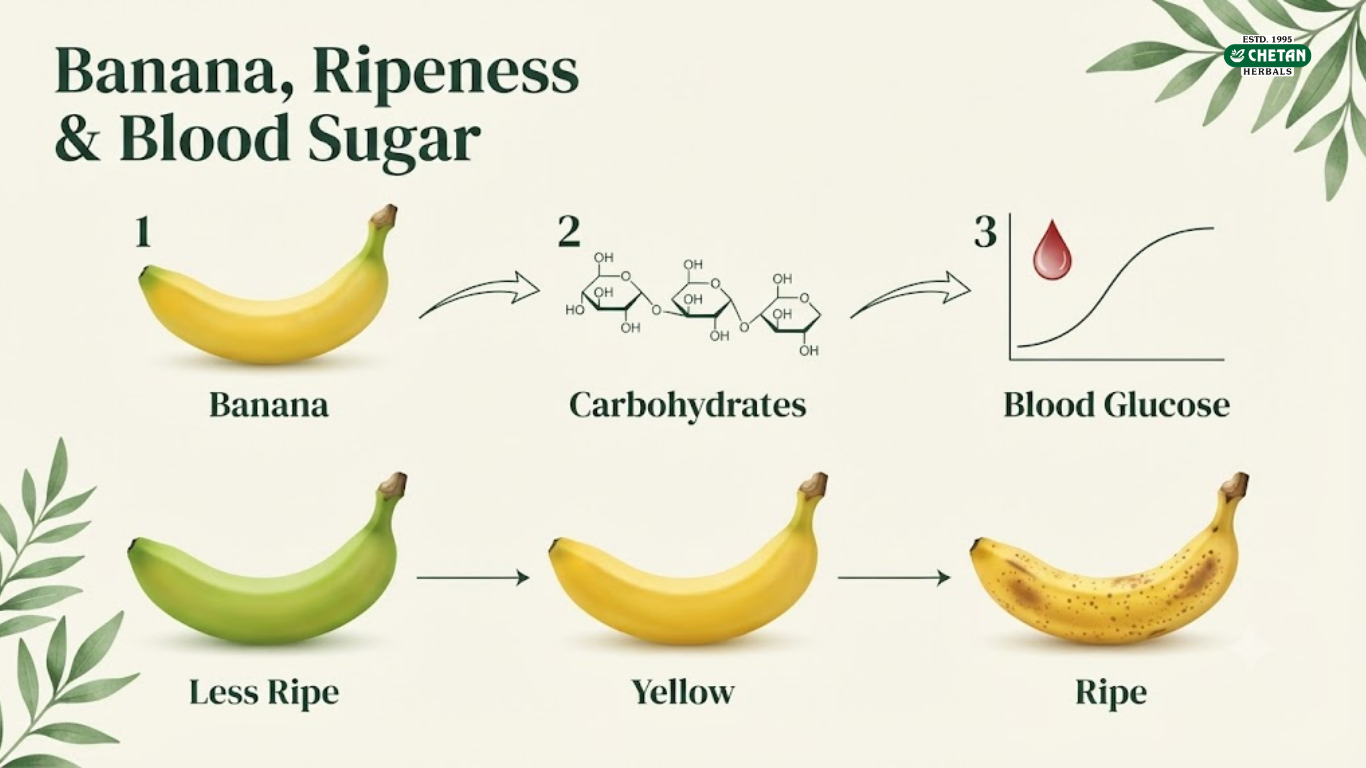
Bananas contain carbohydrates, which are broken down during digestion and can increase blood glucose.
However, a whole banana also contains fibre. Whole fruit is different from fruit juice or sweetened fruit drinks. Whole fruit generally retains its fibre and does not have the same free-sugar profile as fruit juice.
Ripeness can also influence the carbohydrate composition and glycaemic response of a banana. As bananas become riper, their texture becomes softer and their taste becomes sweeter.
This does not mean that ripe bananas are prohibited for people with diabetes. It simply means that portion size, ripeness and individual blood glucose response can be useful considerations.
Can Diabetics Eat Ripe Bananas?
Yes, people with diabetes can generally include ripe bananas, but portion control remains important.
If you prefer ripe bananas, consider:
- Choosing a small banana or smaller portion
- Avoiding very large servings
- Eating the fruit whole rather than as a sugary drink
- Considering other carbohydrate sources in the same meal
- Monitoring blood glucose if your healthcare professional has recommended doing so
There is no single level of ripeness or portion that works for every person with diabetes.
How Much Banana Can a Diabetic Eat?
There is no universal answer to how much banana can a diabetic eat because carbohydrate requirements vary between individuals.
The American Diabetes Association notes that a small piece of whole fruit generally contains about 15g of carbohydrate, although the actual amount varies according to the fruit and its size.
A practical approach is to choose a sensible portion and count it as part of your overall carbohydrate intake.
For example, if a meal already contains rice, roti, bread or another carbohydrate-rich food, adding a large banana may increase the total carbohydrate load.
If your doctor or dietitian has provided you with a specific carbohydrate target, follow that personalised plan.
What Is the Best Time to Eat Banana for Diabetes?
There is no universally established best time to eat banana for diabetes.
Rather than focusing only on the clock, consider the portion and the complete meal.
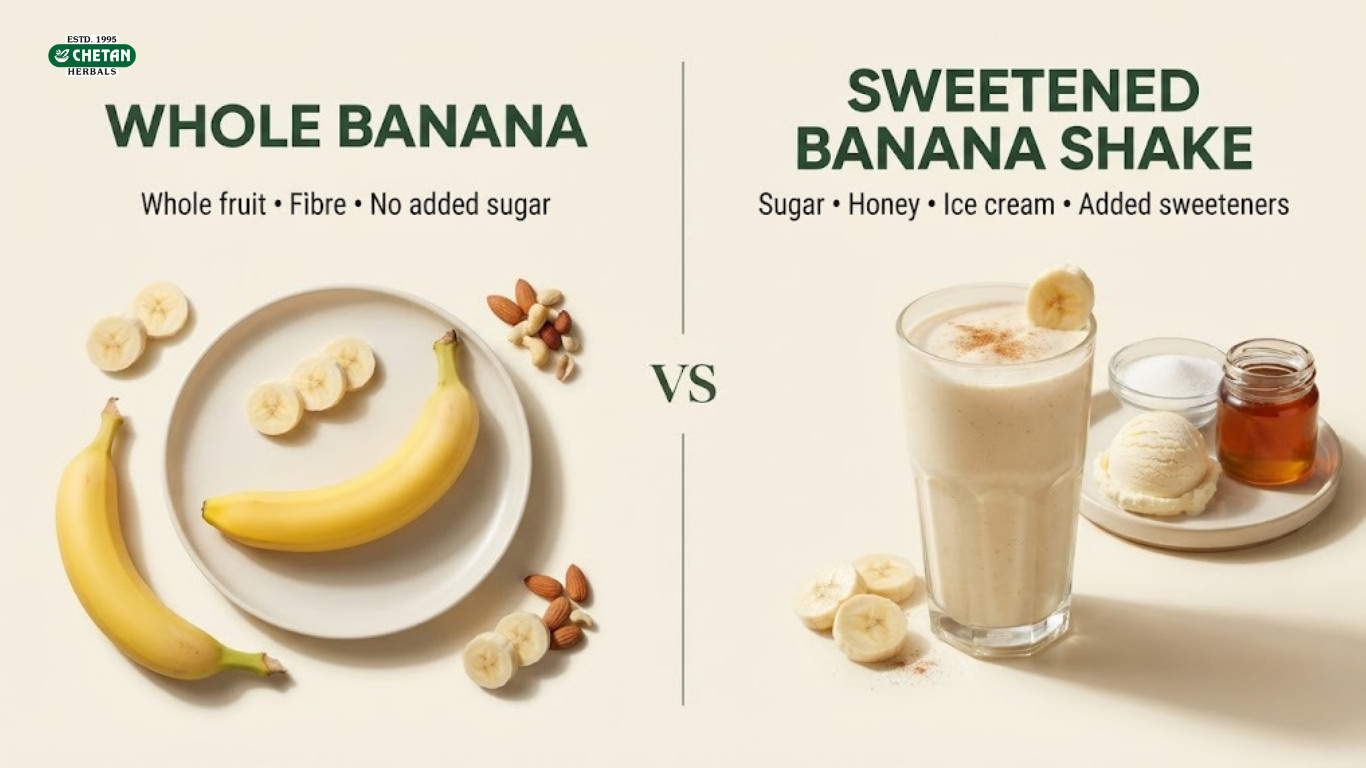
A small amount of whole banana as part of a balanced meal can be very different from a large banana shake containing sugar, honey, ice cream or sweetened ingredients.
People who regularly monitor blood glucose can discuss their food responses with their healthcare professional to understand how particular foods fit into their individual plan.
Can Diabetics Eat Bananas at Night?
Yes, a person with diabetes may be able to eat a small portion of banana at night, depending on their overall diet and individual blood glucose management plan.
There is no universal rule that bananas must be avoided at night simply because they contain carbohydrates.
However, if you are already consuming a carbohydrate-rich dinner or bedtime snack, the additional carbohydrate from a large banana should be considered as part of your total intake.
Can Diabetics Eat Bananas
Banana vs Banana Shake for Diabetes
When considering banana shake for diabetes, the ingredients matter.
A whole banana is a simpler option than a heavily sweetened banana shake. A homemade shake may contain:
- Added sugar
- Honey
- Ice cream
- Flavoured syrup
- Sweetened milk
These additions can substantially increase the carbohydrate and calorie content of the drink.
For people managing diabetes, choosing whole banana instead of a sugary banana drink can make it easier to control what goes into the meal or snack.
How to Include Banana in a Diabetes-Friendly Diet
You do not necessarily need to eliminate bananas. Instead, focus on your overall eating pattern.
- Choose a sensible portion: A smaller serving may be easier to fit into your carbohydrate intake.
- Prefer whole banana: Whole fruit provides fibre and avoids the added sugars commonly found in sweetened drinks.
- Avoid unnecessary added sugar: There is usually no need to add sugar, honey or syrup to banana.
- Consider the complete meal: Look at carbohydrates from rice, roti, bread, dairy and other foods consumed around the same time.
- Maintain physical activity: Regular activity is an important part of diabetes management alongside dietary choices and prescribed treatment.
Ayurvedic Perspective on Diabetes-Friendly Eating
Ayurveda traditionally gives importance to food choices, digestion, daily routine and individual needs when discussing overall health and wellbeing.
From an Ayurvedic perspective, diabetes-friendly eating should not simply be reduced to a list of “allowed” and “forbidden” foods. Appropriate portions, regular routines, physical activity and individual guidance are important considerations.
Ayurvedic approaches may be used as complementary wellness practices, but they should not replace prescribed diabetes medicines, blood glucose monitoring or professional medical care.

Can Diabetics Eat Bananas
Mahamochak: An Ayurvedic Wellness Option by Chetan Herbals
For people interested in Ayurveda and herbal wellness, Ayurvedic Mahamochak by Chetan Herbals can be considered as part of a broader wellness routine.
It is important to understand that an Ayurvedic or herbal product should not be presented as a guaranteed cure for diabetes or as a replacement for prescribed diabetes medicines.
People who are taking diabetes medication or regularly monitoring their blood glucose should discuss the use of any herbal supplement with their healthcare professional, particularly because supplements can sometimes interact with medicines.
The focus should remain on a balanced diet, appropriate physical activity, regular monitoring and the treatment plan recommended by your healthcare professional.
Dr. Chetan Gupta’s Advice
Dr. Chetan Gupta, Ayurvedacharya, advises that people with diabetes do not necessarily need to develop fear around individual whole fruits.
When asking “can diabetics eat bananas?”, it is more useful to consider the complete dietary pattern. Portion size, total carbohydrate intake, meal composition and individual blood glucose response are more meaningful considerations than simply labelling banana as “allowed” or “not allowed.”
A consistent eating routine, regular physical activity and appropriate professional guidance can be more useful than unnecessarily eliminating individual foods.
For those interested in Ayurvedic wellness, products from Chetan Herbals should also be considered as supportive options rather than replacements for prescribed medical treatment.
FAQs
Can diabetics eat bananas every day?
Some people with diabetes may be able to include a small portion of banana regularly, depending on their individual meal plan and blood glucose management. There is no universal daily portion for everyone.
Is banana high in sugar?
Bananas contain naturally occurring sugars and carbohydrates. They also provide fibre and nutrients. For diabetes management, portion size and total carbohydrate intake are important considerations.
Can diabetics eat ripe bananas?
Yes. People with diabetes can generally include ripe bananas, but portion size matters. Ripeness can influence the glycaemic response, so individual responses may differ.
Should diabetics avoid bananas completely?
No. Diabetes does not automatically mean that bananas must be eliminated. Whole fruits can be part of a balanced eating pattern when portions and total carbohydrate intake are considered.
Is banana shake good for diabetes?
It depends on the ingredients. A shake containing added sugar, honey, ice cream or sweetened ingredients can contain substantially more carbohydrates than a small whole banana.
Can diabetics eat bananas at night?
Some people with diabetes can include a small portion at night. The appropriate amount depends on their overall diet, carbohydrate intake and individual blood glucose response.
Conclusion
So, can diabetics eat bananas? Yes, bananas can generally be included in a diabetes-friendly diet when portion size and total carbohydrate intake are considered.
The goal is not necessarily to avoid whole fruits but to understand how they fit into your individual meal plan. Choose sensible portions, prefer whole bananas over sugary drinks, stay physically active and follow your healthcare professional’s advice.
For people interested in Ayurveda, Ayurvedic Mahamochak may be considered as a supportive wellness option, but it should not replace prescribed diabetes treatment or professional medical guidance.







Pingback: How Many Carbs Should Diabetics Eat a Day?